
Archive for Items Categorized 'Automobiles', only excerpts shown, click title for full entry.
Edoardo Bianchi, 1885–1964
by Antonio Gentile
Bicyclists will instantly relate the Bianchi name to famous professional racing and mountain bikes. Artists may remember that Picasso had a Bianchi bicycle in his studio and thought of it as “one of the most beautiful sculptures in the history of art.”
Avanti: The Complete Story
by John Hull
There have been a number of books that have attempted to chronicle the history and lineage of the Avanti. But until now few have given accurate or chronological details.
Porsche 908: The Long Distance Runner
by Födisch, Neßhöver, Roßbach, Schwarz
The 908 was the company’s first car to have an engine of the maximum size the regulations allowed at the time of its inception, 3 liters. It was an important car in its day but is often overlooked nowadays, especially as it is overshadowed by its successor.
We Were the Ramchargers: Inside Drag Racing’s Legendary Team
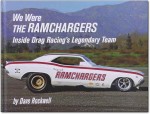
by Dave Rockwell
The Ramchargers were a group of like-minded young engineers who formed an after-hours racing team to transform Chrysler’s stodgy image and make it into a performance brand, in the process becoming one of the most successful drag-racing teams.
The Automobiles of the Maharajas
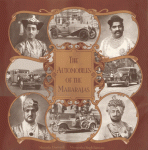
by Manvendra Singh Barwani and Sharada Dwivedi
The book’s handsome presentation, with its copper-toned, deeply embossed dust jacket that protects the finely-textured fabric over the hardcovers, makes it virtually impossible to resist looking inside. Prepare to be transported far away.
The Cobra-Ferrari Wars 1963–1965
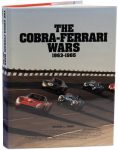
by Michael L. Shoen
First published twenty-five years after the “war”, Michael Shoen’s account, is still considered the definitive work on what is one of America’s greatest motorsports accomplishments of the sixties.
Sports Cars of the Future
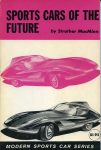
by Strother MacMinn
First impression is this is a modest little book (especially if comparing it to some of the multi-pound coffee table picture books). But once read, especially if reading now in the 21st century, it is virtually impossible to forget.
Autos 1900–1905 and 1906–1912
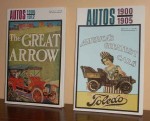
Both of these little books were assembled and printed in 1972. And, while both have long been out-of-print, a recently discovered box of new-old, never-before-in-circulation stock of both of these two books makes it possible for them to be sold brand new again for as long as there is supply.
The Classic Car Paintings of Alan Fearnley
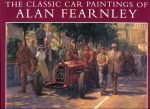
by Alan Fearnley
If you have ever visited the corporate offices of Rolls-Royce, Porsche, or Mercedes, to name a few, you may have seen a “Fearnley” hanging on the wall. Scores of corporate and private clients have commissioned his work as he is one of Britain’s foremost contemporary artists of works with transportation themes.
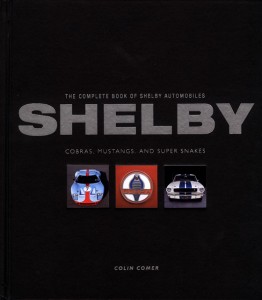
The Complete Book of Shelby Automobiles: Shelby Cobras, Mustangs, and Super Snakes

by Colin Comer
This is a good book saddled with only a fair title. It should have been called simply The Book of Shelby Automobiles. Complete, in the sense of being a truly comprehensive history, it isn’t.
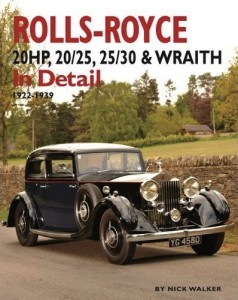
Rolls-Royce 20 HP, 20/25, 25/30 & Wraith in Detail, 1922–1939
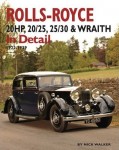
Rolls-Royce 20 HP, 20/25, 25/30 & Wraith in Detail, 1922–1939
by Nick Walker
All of these models were market successes for Rolls-Royce in the years between WWI and II. Launched in 1922, they at first added to the 40/50 hp (a/k/a Silver Ghost) range they followed, and then gradually outstripped it in sales.
Che’s Chevrolet, Fidel’s Oldsmobile: On the Road in Cuba
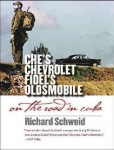
by Richard Schweid
A popular urban myth says that Cuba is filled with pristine examples of American cars from the 1950s and, that when Fidel Castro finally dies, a wave of these befinned wonders will roll up on our shores. Schweid traveled throughout the island nation researching its automotive history.












 Phone / Mail / Email
 RSS Feed
 Facebook
 Twitter