
Archive for Items Categorized 'Maritime', only excerpts shown, click title for full entry.
American Naval History in 50 Ships: Unsung Vessels from the Colonial Era to the Cold War
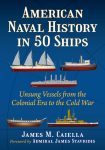
by James M. Caiella
They may have been “unsung” but each of the ships—and their crews!—discussed here played a significant role in American history.
A Technical & Operational History of the Liberty Engine: Tanks, Ships and Aircraft 1917–1960
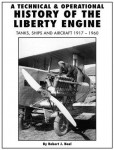
by Robert J. Neal
One of history’s most famous engines, and very possibly the one with the longest active military service life, the Liberty represents an ambitious and visionary solution to what could have become an intractable problem: too much creativity resulting in too much incompatibility.
Leo Villa’s Bluebird Album, with 3D Images
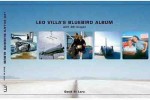
by David de Lara with Kevin Desmond
The Leo Villa of the title spent almost his entire working life with the Campbell family of speed freaks, first Sir Malcolm Campbell and then his son Donald who between them held 21 land and water world speed records.
USS Massachusetts (BB-59), From World War II to Battleship Cove
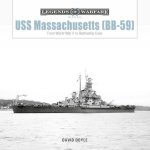
by David Doyle
Commissioned in May 1942, USS Massachusetts was the largest ship ever from that particular boatyard. She saw action within months, sinking several ships and today survives as a National Historic Landmark.
USS Arizona (BB-39), From Keel Laying to Pearl Harbor Memorial
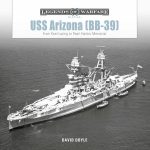
by David Doyle
One of the most powerful warships in the world when commissioned in 1917, Arizona was already slated for replacement when its sinking at Pearl Harbor made it an indelible part of US history.
The Boats of Summer: New York Harbor and Hudson River Day Passenger and Excursion Vessels

by Richard V. Elliott
In the early days, summer life in NYC meant catching a steamer upriver, perhaps returning by train. Two splendid books representing decades of research look at 63 of the over 1000 vessels that provided such a service, ending in the 1970s when diesels had already taken the place of steam.
Razzle Dazzle, United States Navy Ship Camouflage in World War I
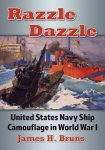
byJames H. Bruns
You may look at a bedazzled ship and wonder, What’s the Point? Doesn’t it draw more attention now? Unlike straight-up camo, it’s not about blending in but obscuring the target’s distance and shape as well as speed and heading.
Sailing the Sweetwater Seas

Wooden Boats and Ships on the Great Lakes, 1817–1940
by George D. Jepson
No railroad lines to speak of, no roads worth the name, the automobile is a long way off. How do we get around? More importantly, how does a young nation, just coming out of the War of 1812, move goods around?
The Last of the Cape Horners
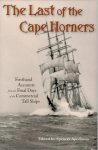
Firsthand Accounts from the Final Days of the Commercial Tall Ships
Edited by Spencer Apollonio
Both the ships and those that sailed on them around the fabled southern tip of South America are known as Cape Horners. While most were put out of business by the opening of the Panama Canal, the last hung on into the 1950s.
Crusader, John Cobb’s Ill-Fated Quest for Speed on Water
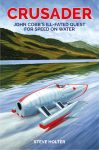
by Steve Holter
For what do you need 5000 lb of thrust? For breaking records. In a jet-powered boat. Air is relatively smooth, water is not. Will it all go right? The author is, among other things, a crash investigator—so probably not.
SS United States: An Operational Guide to America’s Flagship
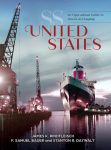
by Rindfleisch, Bauer, Daywalt
Built for speed this superliner claimed a Blue Ribband on her maiden voyage in 1952—and the record still stands! Unusual: she was built right out of the gate with conversion to troop carrier in mind if such a need arose. Unusual: she is still afloat, albeit derelict. Unusual: this book.
The Royal Navy in Action, Art from Dreadnought to Vengeance
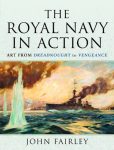
by John Fairley
Warships in action are something fierce to behold, and even paintings reproduced at a size so much smaller than the often majestic originals stir the soul. Throw in some well crafted prose and you have a book you won’t want to put down.
























 Phone / Mail / Email
 RSS Feed
 Facebook
 Twitter