
The Iron Redskin
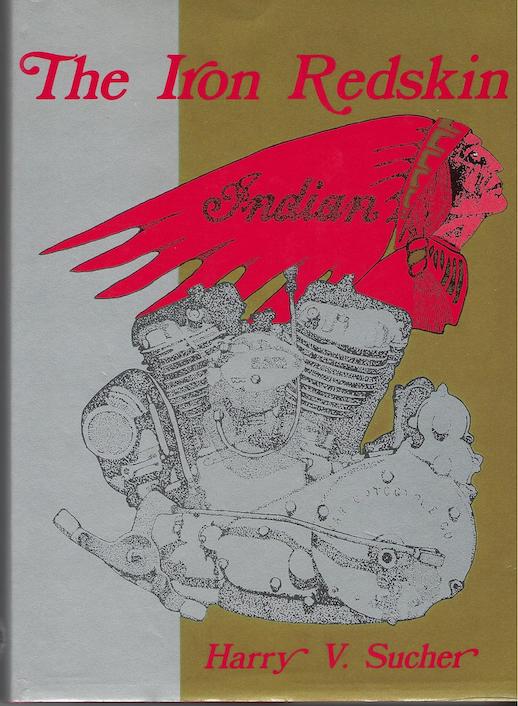 by Harry V. Sucher
“As the once most popular and prestigious motorcycle manufactured in the United States, Indians of all models have become the object of great interest from antique enthusiasts, both at home and abroad.”
When the history a writer wants to tell covers half a century and the writer is determined to tell it thoroughly, omitting no important detail, as this book’s author, Harry Sucher, did, it requires a great many words. In order for the finished book to be a comfortable size and not overly heavy while also being generously illustrated, its publisher—Haynes in this instance—resorted to utilizing an 8-point font, a challenge for tired eyes. (By comparison, the text you see here is 11-point.)
Sucher (1915–2009) was described as one of the foremost American motorcycle historians. His main avocation, pursued all his life, was finding, restoring, and riding antique motorcycles, with a special affinity for Indians. Thus he wrote this definitive history of Indian telling of its people, the company, and its motorcycles. Rather than separate that history into areas or aspects, he’s told it chronologically. For each year there are paragraphs about what was happening inside the factory, others about the state of the business including its management and its board of directors. Their relationship with each other was often contentious. There are other paragraphs telling of motorsports activities including hillclimbs, flat track, and endurance or cross country runs. Then too there are the details of the bikes produced that year.
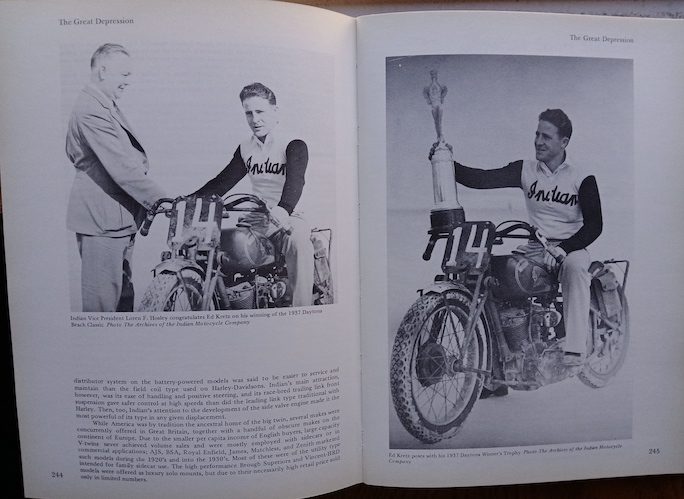
Indian motorcycle history is full of names familiar to many with their achievements astride an Indian motorbike—especially those who raced for the factory, even some independents. Notable among them are “Iron Man” Ed Kretz (above), Edwin G “Cannonball” Baker, New Zealander Bert Munro, and even Floyd Clymer—yes, that Clymer, prolific publisher. Before he even thought of entering the publishing realm, Floyd Clymer (1895–1970) was a motorcycle racer, then dealer and distributor so his involvement comes to the fore on nearly 20 pages throughout Sucher’s book commencing in 1916 and going right up to the 1953 end of Indian production. Additionally, Sucher writes about a little known (but true as I cross-referenced and verified it) fact that Floyd Clymer was convicted of mail fraud and sentenced to five years in prison but only served one year before being paroled.
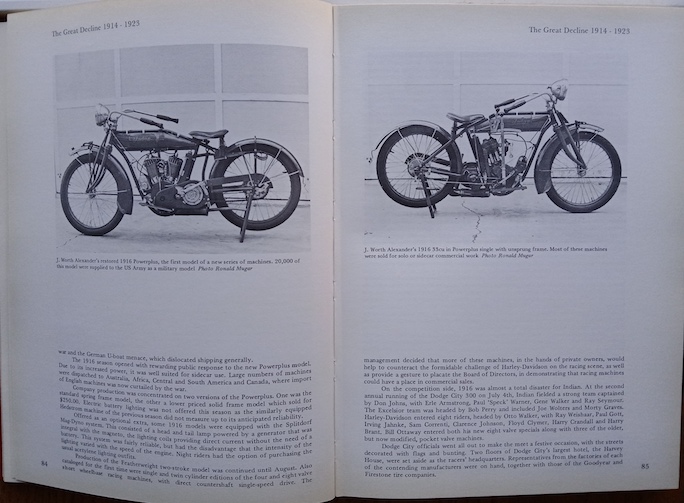
As won’t surprise anyone there are some passages, some parts/aspects of the Indian story that made for particularly compelling reading. Some involve board track experiences or the multi-year “cactus derby” road races from San Diego to Phoenix. One revelation that surprised me was the pathetic state of motorcycle “journalism” during the latter part of the nineteen tens with Sucher referring to them as the “sychophantic [sic] press” as he explained they “were wholly dependent upon the industry for their survival, thus loath to embark on any sort of independent editorials,” certainly nothing even faintly critical or objective was ever written much less published.
“While it was [co-founders George] Hendee and [Oscar] Hedstrom’s remarkable talents that made Indian’s initial success, it was the genius of [Chief Engineer and bike designer Charles] Franklin and the dedication of [president and general manager Frank] Weschler that made possible the company’s survival from its inception to and through the latter1920s.
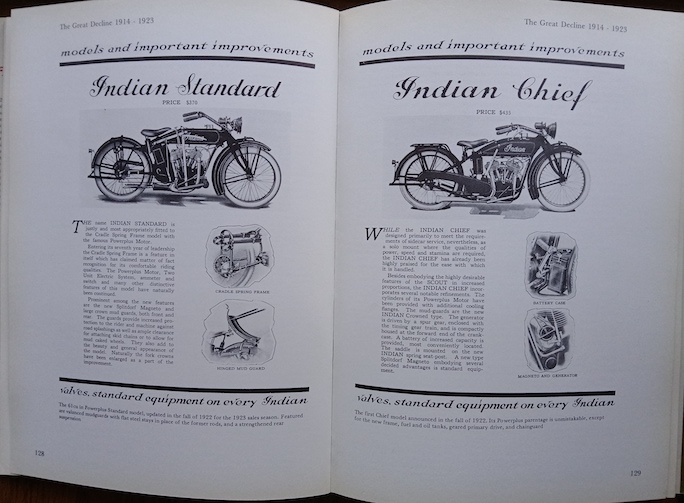
But then came a time of management upheavals with three wholesale changes in 16 months. Amidst the chaos of charges and countercharges, early 1930 E. Paul du Pont, a member of the noted du Pont family, and his du Pont Motors acquired controlling interest of Indian Company, renaming it Indian Motocycle Company, and assumed its presidency. Charles Franklin was still with the company but his health would force him to take a leave fall 1931. Sadly he’d never return as he passed within months.
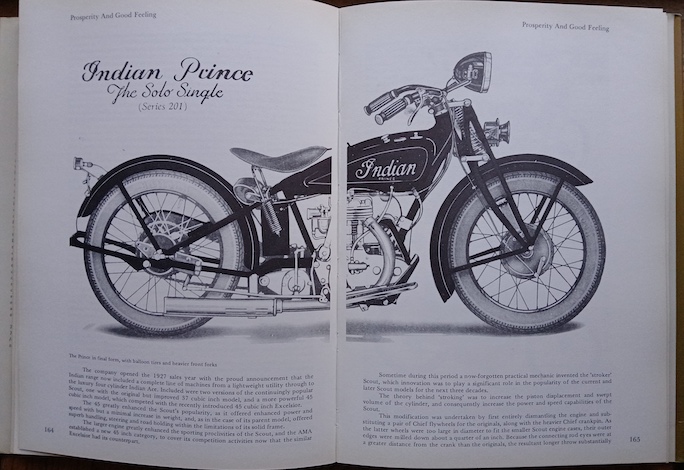
Throughout the decade, Indian continued to lose money each year, albeit in decreasing amounts until, finally, the last month of the decade it did declare a profit. The first third of the 1940s, Indian spent fulfilling military orders but when the wartime contracts were all cancelled mid-February 1944 and, later that same year, War Department purchasing agents voided commitments and refused to pay for stockpiled component parts, Indian’s financial troubles returned. March 1945 “an aging du Pont, who was in failing health and did not feel competent to continue his struggle with Indian’s multitudinous problems” offered to sell the company.
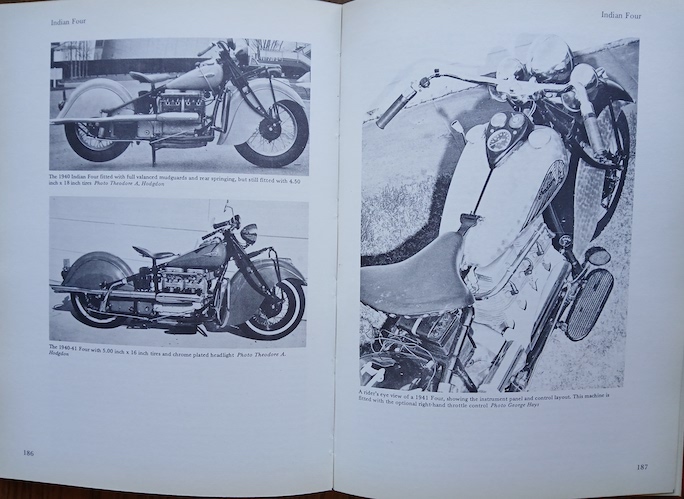
Ownership of Indian changed November 1, 1945. “Post-war era in the United States was a difficult one for most manufacturers. … Machine tooling was in short supply … and many essential goods were still in short supply.” New owner Ralph Burton Rogers also found the Indian factory in run-down condition. But finally, “spring of 1946 new Chiefs began coming off assembly lines using prewar jigs and tooling. … While models found universal favor for their good handling and ease of control, they appeared unable to stand up to prolonged high speed running” necessitating warranty repairs and replacements. Rogers negotiated an outside investor who insisted on installing some of his own people at which point Rogers tendered his resignation.
When the losses continued to mount, Indian’s financiers opted to separate Indian Motocycle Company into two entities. The sales arm became a distributor of multiple makes while manufacturing function was taken over by another who assigned it to one if its subsidiaries. When that manufacturing entity failed to show satisfactory profits, Indian production ceased August 1953.
Although over the years numerous attempts were made to resurrect Indian—the company and its bikes—it would be 45 years until The Indian Motorcycle Company of America in Gilroy, California would succeed—more or less.
Copyright 2026 Helen V Hutchings (speedreaders.info)














 Phone / Mail / Email
 RSS Feed
 Facebook
 Twitter