
The Automotive Alchemist
by Andy Saunders
“’Andrew has 110% ability, interest and knowledge of everything . . . to do with the automobile. If this interest could be diverted to his school work he would be the best pupil Henry Harbin has ever had.’
I was proud of this.”
Well, right there you have the makings of a fine story because clearly this one ends well, no matter the lamentations his form teacher recorded in the end-of-year school report. This is a big book and presents some 60 vehicles—but Saunders (b. 1963) says there are at least 200 more that “need” to be built, by which he means he has to get them out of his system, almost like a purge. To him, it doesn’t matter how important the car is but how important the idea is in his head. Besides, as soon as a car (or boat, or sculpture) is finished, he loses interest. It must be exhausting to be Andy Saunders.
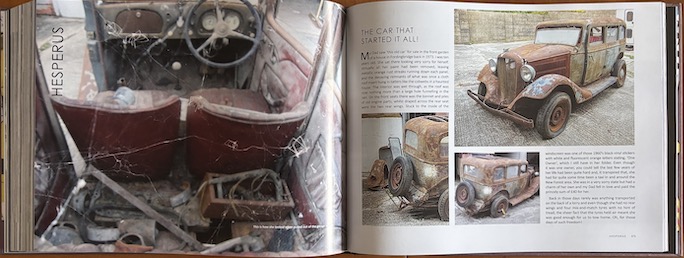
“The car that started it all.” Saunders was 10 years old when his dad brought home a “forty-year-old American car from a company who had stopped manufacturing thirty-five years earlier.” He still owns it, and will until “the end” which he reckons to be 2055—because a clairvoyant told him he’ll live to be 92.
But, first things first. Let’s assume you don’t already know about Saunders. Why should you take an interest in a book about custom/kustom cars made by a Brit? Also, let’s assume the cover doesn’t intrigue you (whaat??), and that neither the skills of design nor craftsmanship move you (whaaat??). In that case, take a hint from your betters. Say, one Karl Ludvigsen, hardly known for hyperbole, who uses the words “Michelangelo of Metal” in his Foreword (and could see commissioning Saunders to do a twin-motor Mini for him) or the King of Kustomizers, George Barris, saying he followed Saunders’ work from early on. Do you still want to be a snob?
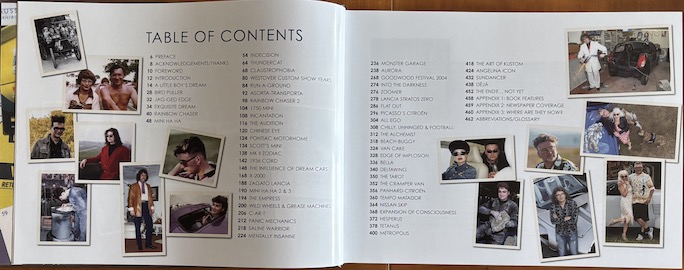
This book is less autobiography than annotated scrapbook in which the genesis of various projects is correlated to life events. Since the projects are presented in build order, the life story ends up more or less chronological except that some projects overlap—an extreme example: his 1937 Cord 812 Westchester Sedan took 7000 hours over 17 years—so there is a certain lack of linearity. There is a LOT of detail in this book, and you’ll be delighted with it the first time you come across it, and then frustrated because you’ll never find it again as there is no Index. Also, certain dots remain difficult to connect; for instance, there is no real clarity which of these projects were/are done for his own entertainment or as commissions (but there is an “Where Are they Now?” appendix). The prose is engaging, well-paced, and fully thought out
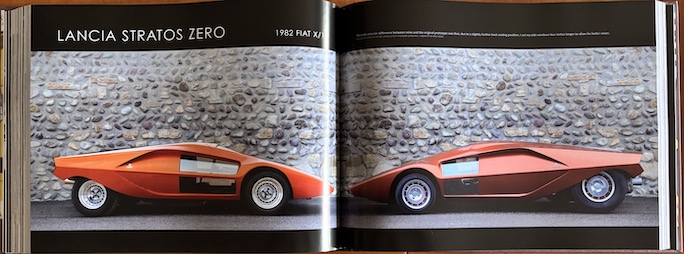
One of these is the original Stratos, the other is not. Since you’ll probably see neither in the wild this is not going to be an easy comparison. The bigger question: does one look/work better?
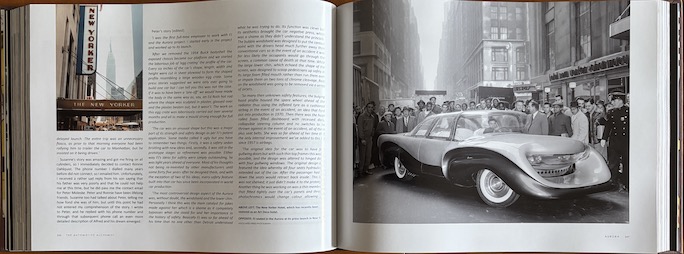
The book includes a number of often extensive special features, for instance on car shows or dream/concept cars. This is the 1957 Aurora Safety Sedan which did exist in period and now again in a Saunders version.
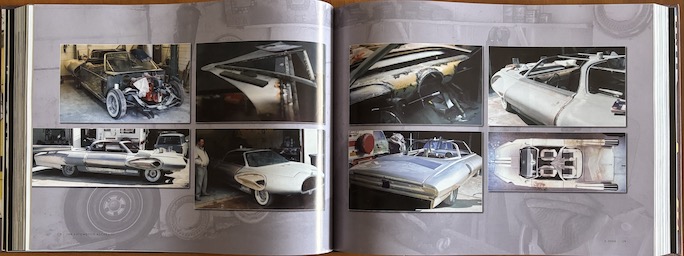
Ford really did once make an X-2000. In fact they made two, but they were only 30″ long. Saunders went full-scale.
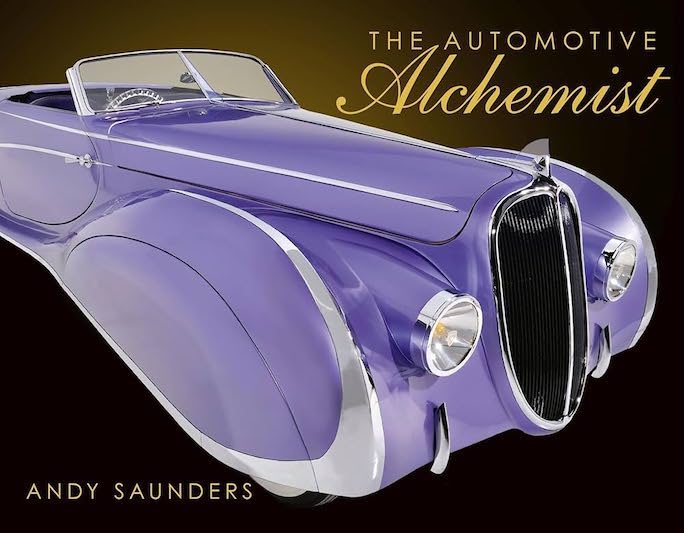
That cover car—there is a connection between it and the existence of this book. Both were unveiled in 2022, the car in November at the Paris Salon de l’Automobile. Surely you recognize it as a Delahaye, but do you see it is a mash-up of a Figoni design and a Saoutchik design? Of course you cannot see it sits on a Riley chassis or know that the idea for it began to percolate when Saunders espied some rusty Delahaye fenders for sale at the Beaulieu International Autojumble in 2018 and simply bought them for their sweeping shape.
Much has been written about Saunders vehicles (references in other books and in magazines are appended) but this book in his own voice is where much useful detail finally comes together, with what the book’s press release rightly calls “honesty and humour.” The humor reference is proven true easily enough but honesty may mean veracity (never easy to gauge in an autobiography) but also candor, and candor is certainly in full flower here, not least because Saunders had to have open heart surgery as a teenager (1979) which recalibrated how he saw life.
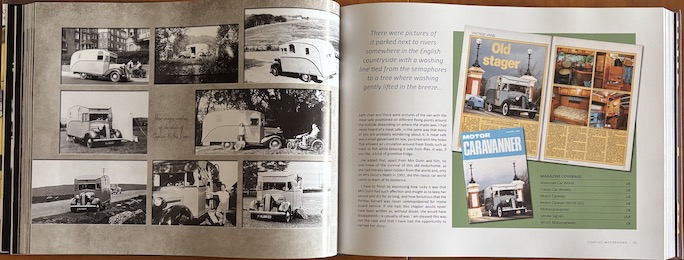
A straight-up restoration.
He started applying his creativity to cars as early as 10 years old, on the used-car lot his father had started as a second business, but there’s only so much exotica that will come up for sale or trade in a small coastal tourist resort in Dorset so it is interesting to note that it was car books his father bought for him that opened Andy’s eyes to the wide world of cars and set him on the path he is still on (Yay, Books). From wildly improbable fantasy cars to concours-level restorations you will find here that the book title was chosen well—Alchemist.
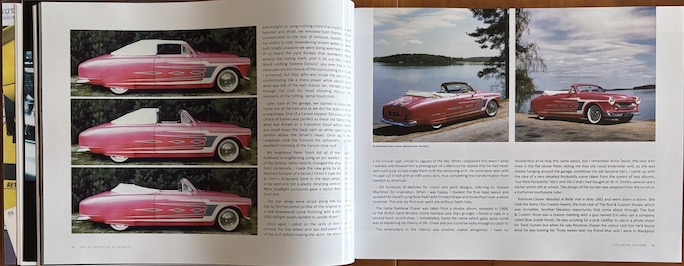
You’ll really have to have a good imagination to figure out what this car was before Saunders modified it.
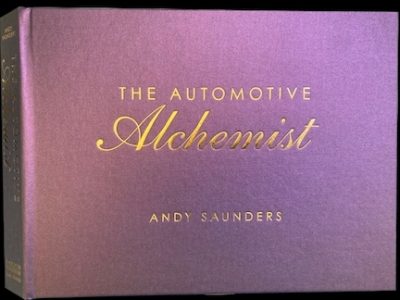
Even the metallic purple look of the book cover is a well-considered choice.
There are over 1000 images in this landscape-format book, splendidly printed on glossy paper. Maybe the book won’t change your mind about custom cars but not one thing here is boring or unoriginal and in fact there’s plenty of interest simply in generic historical terms about people and places. Saunders doesn’t consider himself much of a mechanic but all the vehicles work; well, most of the time—there are some hilarious anecdotes here!
Awarded “Best Book on Design 2023” by Motorworld (Germany).
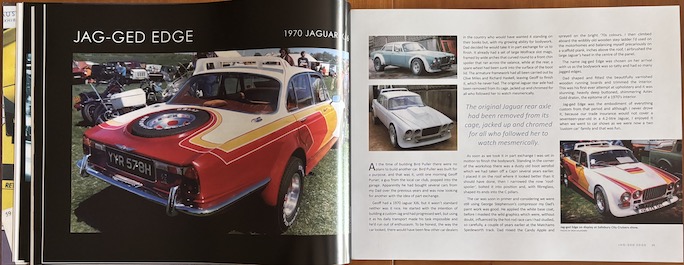
What clever car names! One was called “Tetanus” and you can probably guess why.
Copyright 2025, Sabu Advani (speedreaders.info).





















 Phone / Mail / Email
 RSS Feed
 Facebook
 Twitter