
Power Unleashed: Trailblazers Who Energised Engines with Supercharging and Turbocharging
 by Karl Ludvigsen
“It is my contention that a modicum of development along these lines would result in unbeatable cars in either class. The problem of maximum boost pressure with a given combustion chamber and fuel would be a rewarding one for a manufacturer to tackle. Indeed, much ground has already been covered, in that a blown 1,100 cc car would develop 100 bhp, given the same bhp per cubic inch as General Motors’ Le Sabre and XP-300. Also, the blown engine performs more pleasantly over its speed range than a modified unit with normal aspiration and is thus well-suited to a dual-purpose car.”
We chose this excerpt from the Preface to make two points: 1, even in its foray into historical matters the book is bound to be intensely technical; 2, those words are in this book but not written for it—they are from a 1955 university proposal coauthored by Ludvigsen who then further explored the subject a few years later in his first book and then again in articles and other works, meaning it has never been far from his thinking.
It doesn’t mean he’s been actively working on this book for 70 years but that he’s had ever deeper immersion and made many contacts with principals which enables him to connect many dots. People who have a grasp of automotive literature will appreciate that it was Griff Borgeson who singled out Ludvigsen’s 1970 article “Origins of Supercharging” in Automobile Quarterly (vol 9, no. 2) as a sorely needed contribution to the field.
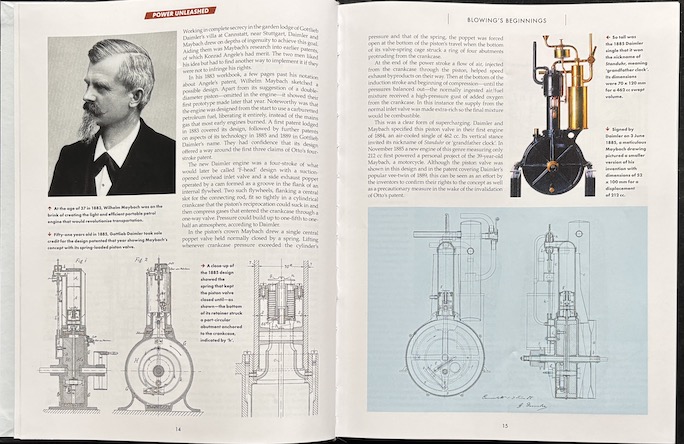
Gird your loins, we’re only on p. 14 of vol. 1 and you can expect a LOT more like this. Between the body copy and the captions there is a lot of detail about how stuff works but you have to actively think along.
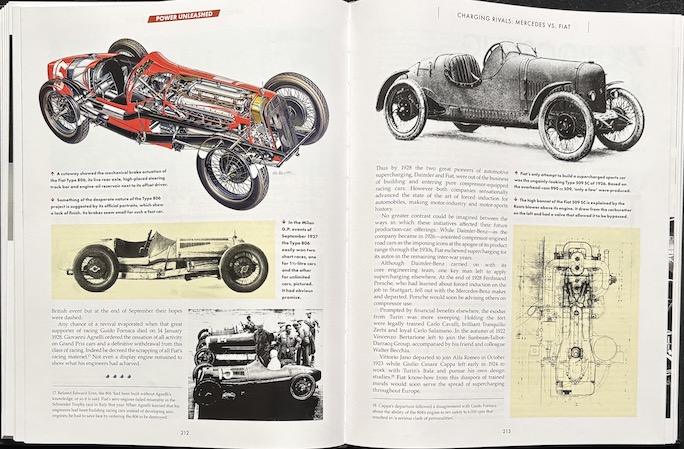
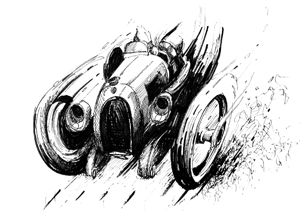
But it’s not all exploded schemata. Plenty of interesting race cars are being discussed as motor racing was obviously ground zero for performance boosting.
There are a lot of numbers in this book so let’s start with one because we’d have to get to it sooner or later: 25.51.
Round up to 26; the unit of measure is cents, as in 26 cents a page. A bargain, no? There are 1960 pages in these three books (henceforth referred to in the singular). You see where this is going. The book has a list price of $500 but math being math, the book remains a bargain, no? It was years in the making, it is written by a name you have known and trusted over the course of more than seventy books and countless articles, and for anyone who remembers what a shock to the system a 2011 press release was, its mere existence is a relief: that was the year Ludvigsen turned over his automotive archives (files, photography, library) to the Collier Collection managed by the Revs Institute, with a mind to pursue his other interests, in aerospace and military history. No one knew what if anything would come next. The topic of this book straddles both genres, automotive and aviation.
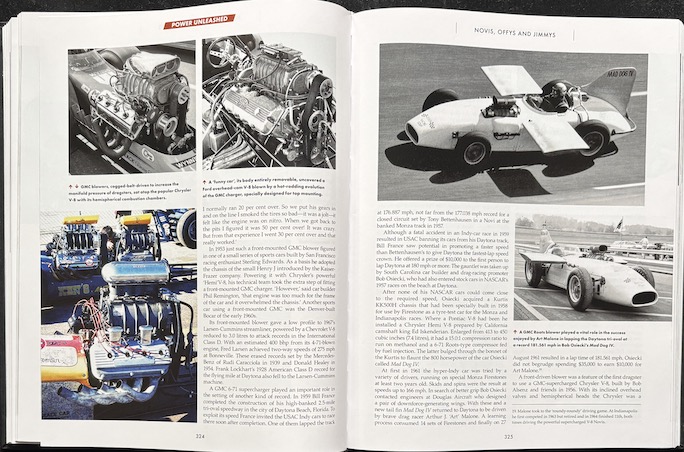
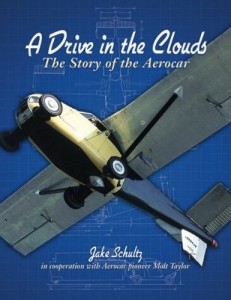
Yes, aviation and turbocharging go together but the winged car on the right is about something different altogether.
In a nutshell, an air-breathing internal combustion engine (operating in Earth’s atmosphere) is terribly inefficient at converting the air it needs to inhale to create combustion into the energy that is required to create propulsion. Increase one, increase the other. Unleash the Power! Apologies to the pocket protector brigade for this shorthand way of framing the problem.
No shorthand in this book! It throws 1960 pages at the problem. And what a problem it was, and in some measure is still, is evident in the wide array of proposals and inventions discussed here.
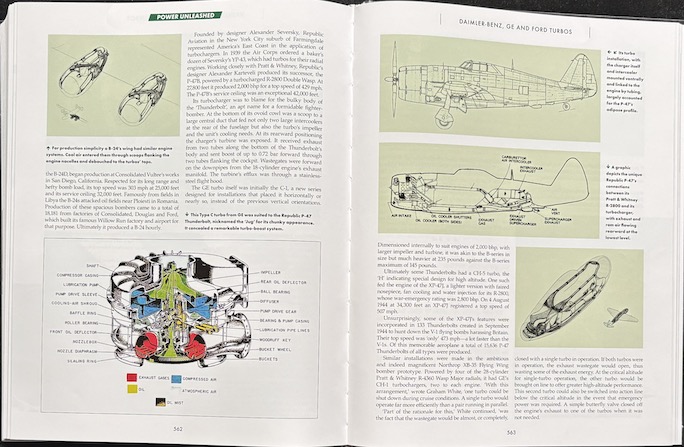
Vol. 2 is all about variety, from Ford flatheads to all manner of aviation applications.
A book review cannot meaningfully encapsulate the vastness of detail on offer here, and it would be presumptive to comment on the exceedingly few—and peripheral—errors that have already been brought to the author’s attention. What we can do is comment on methodology and to manage expectations. Each of the three volumes has a different core topic but each runs to a fairly similar page length, from which follows that the scope of what each contains, and the level of magnification has been curated to fit the available space (consider that Ludvigsen has an entire book in the works about a one-off 1952 Ferrari V12-powered racing hydroplane with a supercharged engine). What matters is that the author has command of the subject matter and is able to draw a reliable map, from the first small trickle—Otto’s 4-stroke, Clerk’s 2-stroke, Diesel—to the full rush of ever more specialized applications across different modes of transportation subject to different operating parameters. This involves a discussion of supercharging not being the same as turbocharging, which would be self-evident if it had kept its original name: turbo-supercharging. If this were the only topic on which you can hold forth with authority after reading this book you’d already be ahead of the pack.
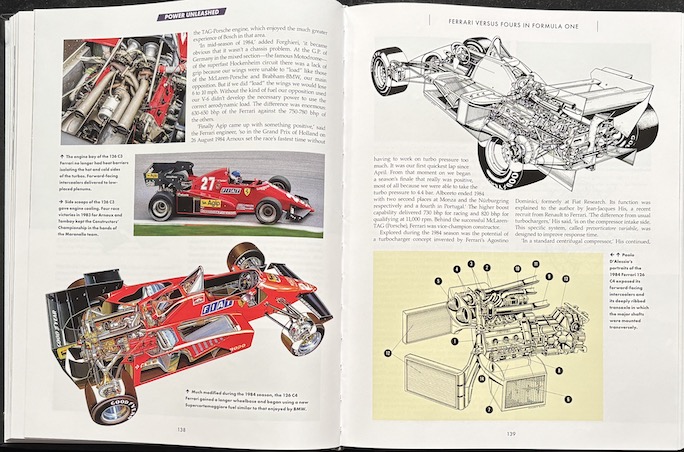
The F1 crowd will obviously expect the Turbo Era to be dissected (vol. 3).
One key aspect that deserves pointing out is that the reader is made to consider an often overlooked aspect of progress: experience can be an obstacle; to wit, engineers who came from a steam engine background initially had a hard time embracing entirely new concepts.
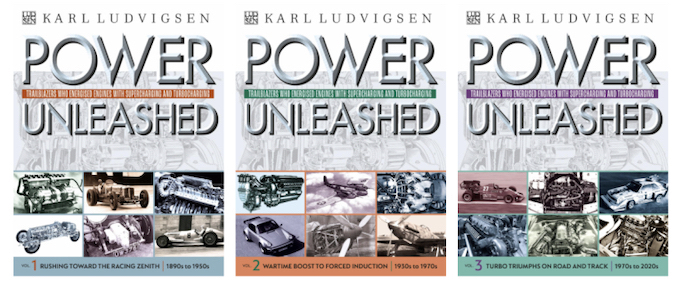
Vol. 1 “Rushing Towards the Racing Zenith” covers the 1890s to 1950s, Vol. 2 “Wartime Boost to Forced Induction” partially overlaps and covers the 1930s to 1970s, and Vol. 3 “Turbo Triumphs on Road and Track” the 1970s to 2020s. Each volume has its own thorough Index, usefully subdivided by people/machinery and companies/events and venues (but no “general” index which may well be unachievable anyway). The text is augmented with several thousand precisely captioned and well placed photos and technical illustrations, and enlivened with excerpts from period reports. It is remarkable enough that the illustrations “suit” the text but it is more remarkable that someone knew where to find them.
Does it need to be said the book is not a casual read? It’s easy enough to follow the story, and in an organic manner, but you shouldn’t skip around, at least not the first time or only as a quick scratch-the surface orientation. There are some 700,000 words ahead of you so hang up the “Do Not Disturb” sign!
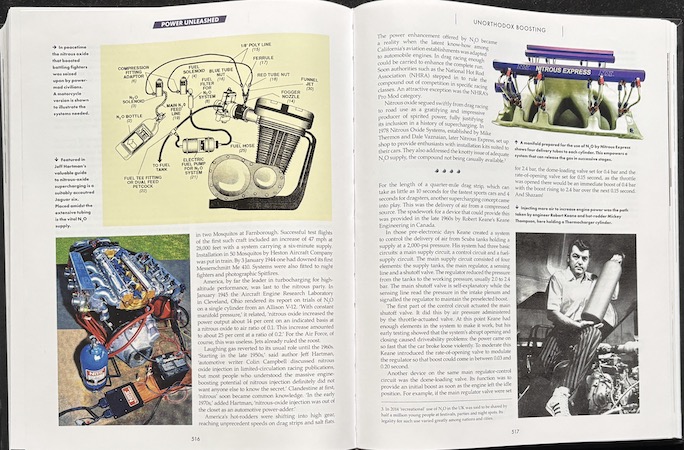
The last two chapters in vol. 3 are an ideal point to start getting into the subject because by covering “Unorthodox Boosting” and “Rotaries to Leaf Blowers” they address many issues a thinking reader would invariably ruminate upon as they pick up the thread in vol. 1 and follow where it leads.

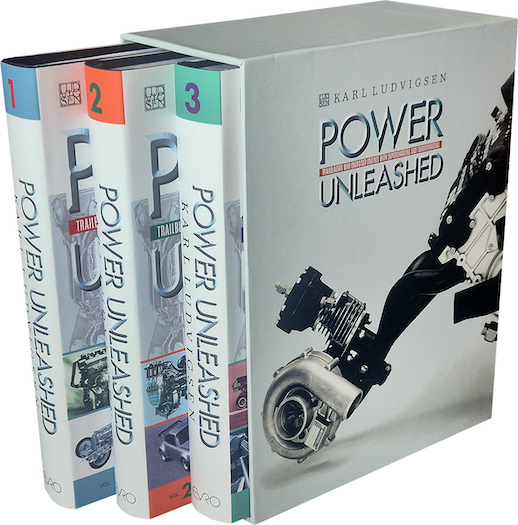
The books weigh over 17 pounds—this 90th birthday cake looks pretty substantial too!
Footnotes are right on the pages on which the body copy calls them out—extremely convenient, and it also reduces wear on the book by not having to page forwards and backwards all the time Speaking of wear . . . you may not appreciate this right away but will after a couple of years of use: the spines are rounded which is essential to the bottoms of the pages of an upright book not sagging which in the long run causes structural damage. Nice touch: each volume has one ribbon bookmark—but you’ll end up plastering post-its all over anyway.
Won the 2025 Royal Automobile Club “Motoring Book of the Year” Award, and “Motoring Book of the Year” at the International Historic Motoring Awards.
Copyright 2025, Sabu Advani (speedreaders.info).
 RSS Feed - Comments





























 Phone / Mail / Email
 RSS Feed
 Facebook
 Twitter