
Real Racers – Formula 1 in the 1950s and 1960s
A Driver’s Perspective
by Stuart Codling
The “driver’s perspective” alluded to in the title takes here the form of commentary by drivers who raced during those decades. This is a useful approach, and certainly lively, entertaining and direct—but it does not [want to??] put its finger onto the core of the issue.
Russian Motor Vehicles: Soviet Limousines 1930–2003
by Maurice A. Kelly
Maybe the production of this book was already too near its end to include a notice that it was only May 2010 that Russian President Medvedev made it known that he desired to replace his Mercedes Benz state limousine with a proper domestic product. Not that there are any to choose from . . .
Women Aviators: From Amelia Earhart to Sally Ride
Making History in Air and Space
by Bernard Marck
It is either coincidence or clever planning that this book came out just about the time the movie Amelia (as in Earhart) was released. One can only wish that movie or book will fan the flames of interest in this deserving subject!
The Golden Age of Handbuilt Bicycles: Craftsmanship, Elegance and Function
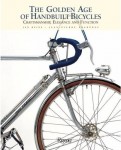
by Jan Heine & Jean-Pierre Pradères
Toaster. Wristwatch. Eggbeater. Bicycle. Any number of devices play essential roles in our daily lives and yet are so ubiquitous that we often enough no longer marvel at their operating principles, purposefulness, and the realization that once they didn’t exist—and then they did.
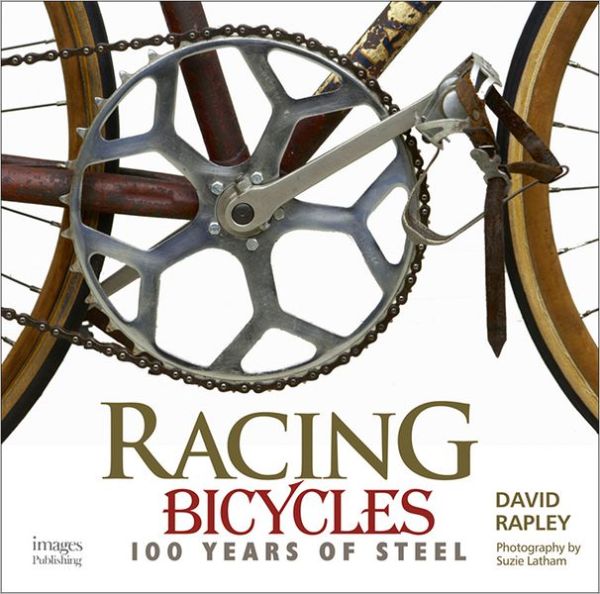
The Competition Bicycle: A Photographic History
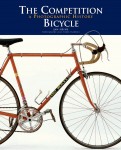
by Jan Heine & Jean-Pierre Pradères
Three years after giving us The Golden Age of Handbuilt Bicycles, the same author and photographer have teamed up to present a similar opus on hand-built special-purpose bicycles from 1880 to 1994.
O’Keefe Winners Database 1895–2010
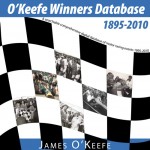
A Searchable Comprehensive Digital Database of Motor Racing Events 1895–2010
This CD-ROM is a digital version of O’Keefe’s The Winners Book: A Comprehensive Listing of Motor Racing Events 1895–2009. Unlike a printed book, a digital database can be kept current in perpetuity in the form of periodic updates.
Secret Aircraft Designs of the Third Reich
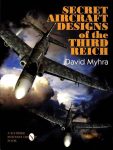
by David Olaf Myhra
Unless you already know a bit about this subject you’ll probably be surprised how many hundreds of advanced aircraft projects were on the drawing boards at the end of WWII. In political terms it’s a good thing that that’s were they stayed, denying Germany the technological supremacy that would have altered the outcome of the war.
Legends of the Open Road: The History, Technology and Future of Automobile Design
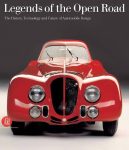
by Gabriella Belli (Editor)
The “Mart” (Museo di Arte Moderna e Contemporanea) logo on the title page and the following three pages of densely printed names of staff, collectors and donors etc. are your first clue that this book might have something do to with a museum show. And so it does.
Karoserie Petera
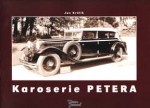
by Jan Králík
Petera is not the first name that springs to mind when one thinks “coachbuilder.” However, this Czech firm was one of the most important coachbuilding firms in Central Europe from 1908 to the late 1970s, first making horse-drawn vehicles, sledges and hearses, then automobiles, trucks, coaches, and even gliders during World War Two.
London’s Airports: Useful Information on Heathrow, Gatwick, Luton, Stansted and City
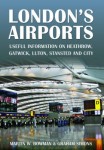
by Bowman & Simons
London, the capital city of England and the United Kingdom, has been a major settlement for two millennia. While hard numbers constantly change, modern-day London did and may still lay claim to the largest GDP in Europe and the most international visitors of any city anywhere.
Preston Tucker & Others: Tales of Brilliant Automotive Innovators and Innovations
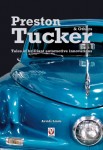
by Arvid Linde
The book’s basic premise is true enough: at all times and in all fields there are those who think outside the box. More often than not they are unlauded, misunderstood, and unrewarded in their own time. Worse, they may be forgotten altogether—hence a book like this.
Something Quite Exceptional: Hugh Easton and the Battle of Britain Memorial Window for Rolls-Royce
by Adam Goodyear
Many aircraft have been, and are, powered by Rolls-Royce engines. In the WWII context it is of course the Spitfire with its Merlin engine that tops the list. It played a pivotal role in the Battle of Britain, where, against formidable odds the pilots of the planes it powered turned the tides of war.




 Phone / Mail / Email
 RSS Feed
 Facebook
 Twitter