
Made in USA
The Secret Histories of the Things that Made America
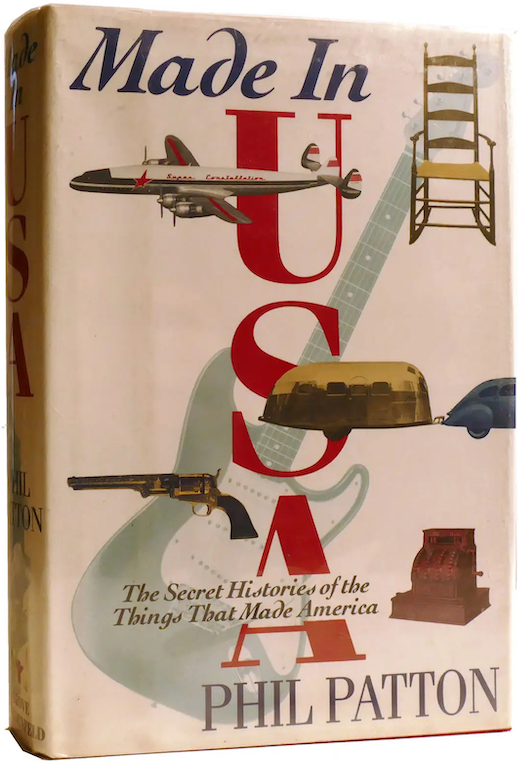 by Phil Patton
“The American character seems to be but partially known abroad. It is only necessary for him to receive an affirmative answer to the question, will it pay? when he gathers up his scattered thoughts, and concentrates them into a single idea, or into the compass of a telegraphic dispatch; and then, as on wings of lightning, he is ready to circumnavigate the globe, or embark in any enterprise within grasp of thought, or the conception of the human mind.”
This book has resided—unread—in my library for many a moon. As it turns out 2026 was the absolutely right one to at last take it from its shelf and read it. The country whose inventors, with their varied achievements, told of on its pages has been observing its 250th anniversary. The author, Phil Patton (1952–2015), had such a fine mind which he applied to researching and writing and was so prolific a published writer that it gave me pause to find he has only one brief mention (until now) on this site.
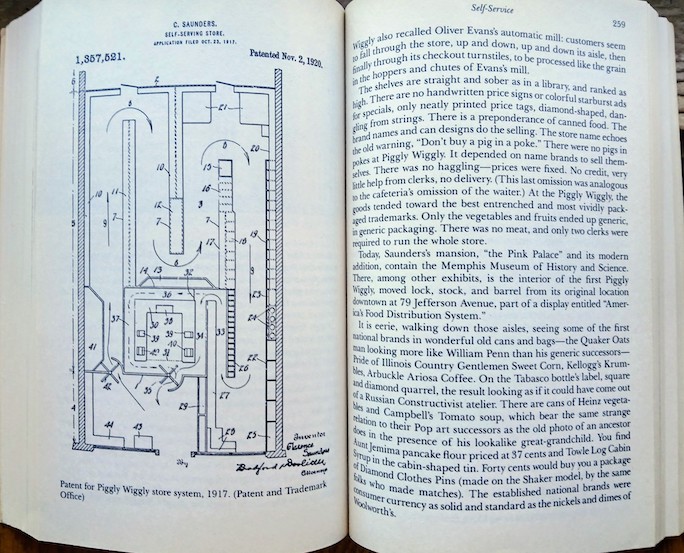
Patent drawing of layout of America’s first true self-service grocery store, Piggly Wiggly, circa 1917.
A bit more about Patton before telling more about this book which is one of at least 30 he either authored or to which he was a major contributing author. It tells you a bit about the character of the man to learn his birth name was Lewis Foster until he changed it to Phil, by which he was known and used his entire life, because that was the given name of the airman who had saved his father’s life in WW II.
Patton was acknowledged and recognized for his focus and expertise on matters of design and technology, especially as it related to history and culture. He had been a broadcast ”talking head” on numerous programs, a popular and sought after lecturer at colleges and universities with others wanting to hear his captivating presentations on his favorite design topics.
 The quote with which this commentary begins is found nearing the halfway point in this book and it succinctly describes the premise that guided all Patton put between the covers of this particular tome. Each chapter offers specific examples and observations of how differences in America set the stage for distinctly American approaches to making tools, equipment, machines, clothing—everything—from the approaches to doing and making things with similar functions in the Old World. That basic premise is reflected in the book’s title and subtitle.
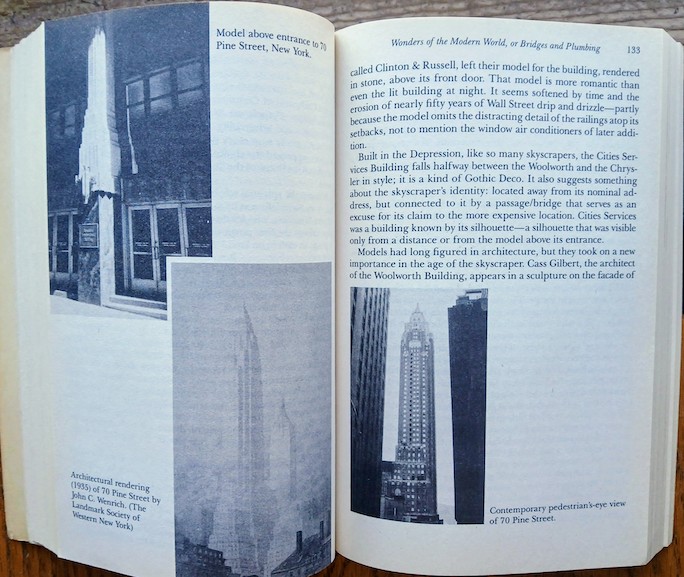
 Although there are illustrations, do be aware this isn’t a picture book. On this book’s pages too many of the images reproduce dark and rather muddy. Oh, but if it is photos of some of the arenas, buildings, bridges, cathedrals, dams, towers, and tunnels Patton writes of that you want, hie yourself off to your nearest library and wander the reference books. You might even spot a copy of a book produced by National Geographic, long-recognized for its superb photography. That book is titled The Builders, Marvels of Engineering and contains photos of the marvels named at the beginning of this paragraph and more. Adding to its specialness are the drawings, additional photos and other information that accompany showing and describing in detail how many of these engineering marvels were actually constructed.
It’s been noted and commented on more than once how technological advancements have had multiple individuals working simultaneously in different locations with no awareness of one another. Certainly that’s the case with early road going vehicles and their methods of propulsion. The same was true with flying machines. In his tenth chapter titled “Airlines,” Patton opens with “Americans in the twentieth century have always considered aviation something like our own national technology.” He goes on to point out what may have been the initial goal of a “plane for everyone, a universal aerial appliance” (think a car in every garage) which, of course, never materialized. What did become reality was an “everyman’s seat” in an aircraft via those airlines.
In a time when virtually everything and a number of people are labeled “iconic,” it has, per Patton, thoroughly devalued the word. He expresses it this way. “Making us look at ordinary objects in this way … there is an extreme sense of the danger of things somehow slipping away, of thinning down to mere icons” thus becoming meaningless. Further on Patton adds “The ad and marketing folks have caught up with this need. They try to use it to lure customers to products offering solidity and warmth.”
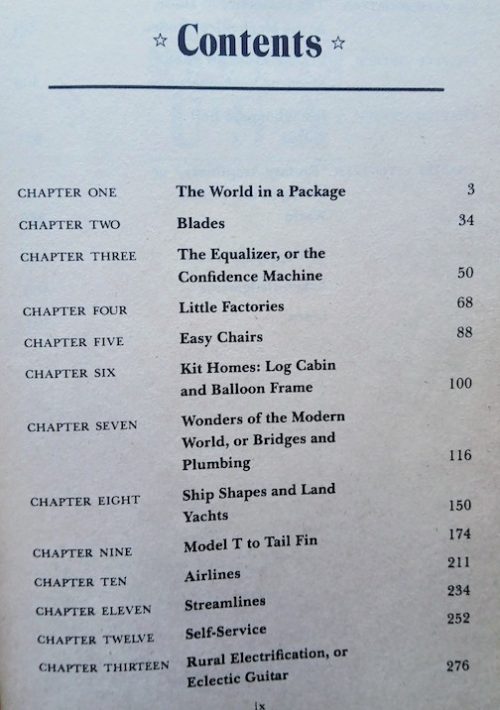
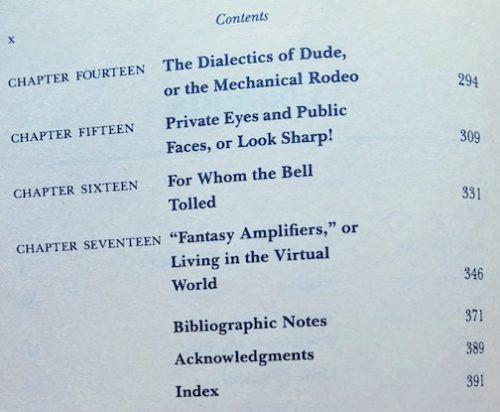
As the table of contents and the above all indicate, Patton’s Secret Histories ranges far and wide over what Americans have wrought. In his Acknowledgments, Patton nods to the half-dozen years of his assembling ideas and information that gradually grew into chapters—always with input and help from others—many of whom he names. Then still more information was obtained from the holdings of libraries and research centers. Those sources make up the content of the 18 pages of Bibliographic Notes organized first by “General Sources” and then by individual, specific chapters. It’s excellent reading and guaranteed to stimulate a reader’s grey matter.
Copyright 2026 Helen V Hutchings (speedreaders.info)




































 Phone / Mail / Email
 RSS Feed
 Facebook
 Twitter