
F1 Controversies: Formula One’s Most Dramatic and Polarizing Events
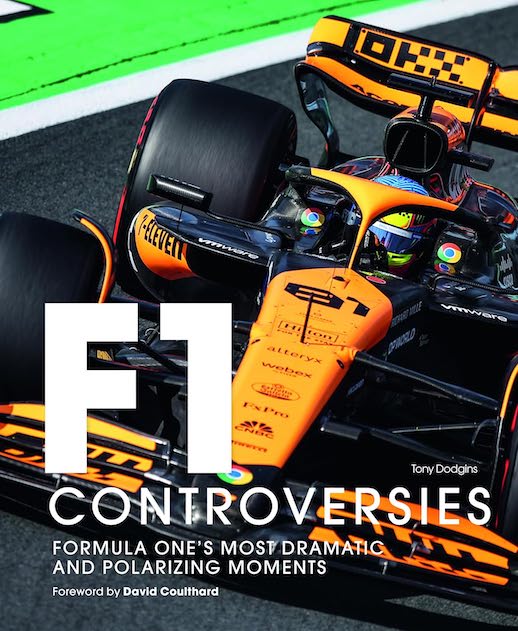 by Tony Dodgins
“The weekend of 17–19 June 2005 will forever remain a dark stain on Formula 1’s history. It was a time when ego and politics trumped rationality. When a mere six cars started the US Grand Prix at Indianapolis, the 130,000 fans who flocked to the Speedway were shamelessly short-changed.”
Why a field of only six cars? Think “tires.”
If you never knew the circumstances, this book has many truly enlightening stories to tell. If you do, then the inclusion of a story like the above is evidence that Tony Dodgins isn’t just riding the coat tails of the growing current interest in all matters F1 by writing a fluff book about low-hanging fruit. Nope, from technical issues to personality clashes to organizational matters to the actual on-track action, Dodgins examines the decades-long history of the F1 apparatus to analyze examples of the sometimes accidental sometimes intentional aberrations that constitute the darker side of a glitzy sport. There is real substance here. Add to that that the book is well-illustrated and has a laughably low MSPR of $45/£35 and you have a winner.
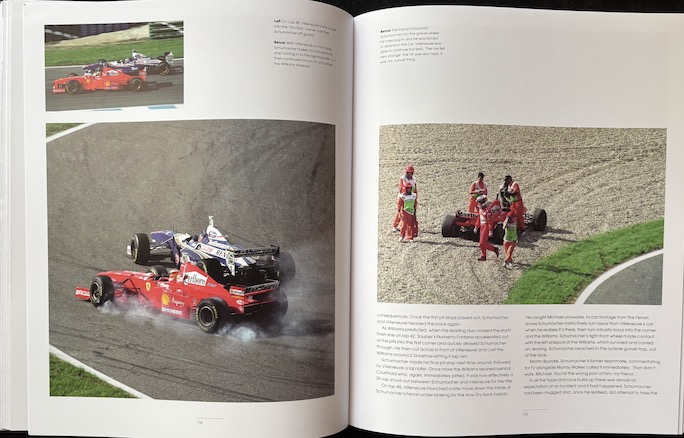
It’s not just the writing that is good in this book but also the photo editing. Here an example of words and photos being so well in synch it’s as if this chapter was storyboarded and then photographed to spec.
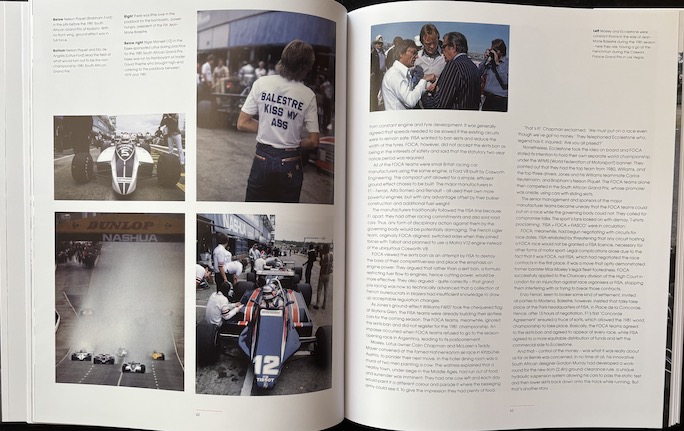
Left page, top right: Again, just the perfect photo, for a chapter titled “FISA+FOCA = FIASCO.”
After decades of following and commenting on F1, this Autosport journalist and editor of the Autocourse yearbook has a consummate grasp of the subject matter, which enables him to not beat around the bush and be able to back it up. Consider the title of the chapter from which our intro quote was pulled: “Todt and Mosley help sink Indianapolis.” Whether it’s the always-at-the-worst-time lack of sportsmanship of a multiple world champion like Michael Schumacher or the shenanigans behind Spygate or driver Filipe Massa suing the FIA/FOM/Bernie Ecclestone over Crashgate for costing him the 2008 championship (something that is in the courts right now), there are some uncomfortable truths about the human condition and tunnel vision on parade here.
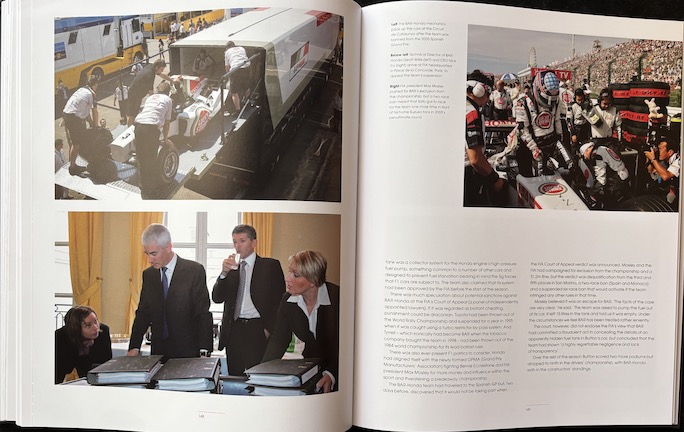
Ever wanted to take a look behind closed doors, say at an FIA appeal? This is about BAR-Honda getting banned.
Not all is nefarious, however, because the book title promises not only “polarizing” but also “dramatic” which doesn’t necessarily imply anything unsavory. The book begins with the Portuguese GP of 1958, titled “Sportsmanship wins.” Sportsmanship did win, not the race, which that driver had in his pocket, but a moral victory. That race is in this book because it would cost the driver that season‘s championship—by a single point in the final round (Hawthorn v Moss). A rousing way to start the book!
Dodgins adds even more color by pointing out that Hawthorn privately called Moss “Moses” in a put-down of his Jewish heritage, a disdain exacerbated by Hawthorn holding himself as a Gentleman Racer, with all the cachet that term represented then, while seeing Moss as the upstart professional who raced for coin to make a living. Remember that the next time you see photos of the two jovial and joking—PR spin:
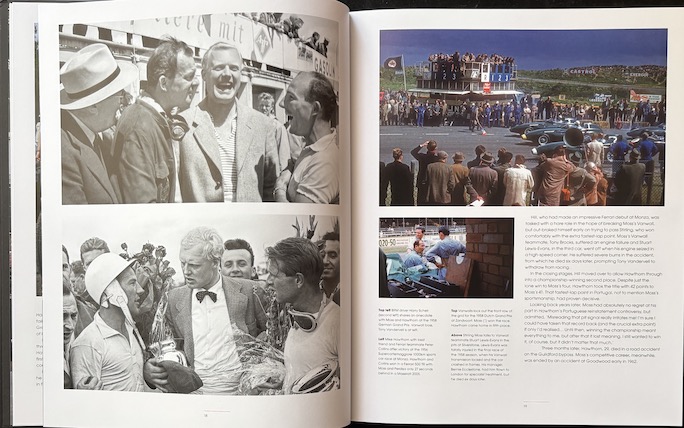
Top left, the two laughing fellas are Brits Hawthorn and Moss (r). Buddies, right? Not so much.
This level of detail is evident throughout. Dodgins thinks bigger, though, and embeds the one race he has singled out into the context of the whole of the racing season so the reader can appreciate all the moving parts. There is not a bad choice for the “feature” race, and, if anything, it shows discipline to settle on just one lest the book would keep growing, beyond its allotted page target and price point.
Progressing chronologically but selectively the book skips its way to the 2025 season, ending with the innocent-sounding chapter title “The ‘hands-off’ FIA president.” But notice the quotes within quotes, a well-earned gut punch to the man who is anything but.
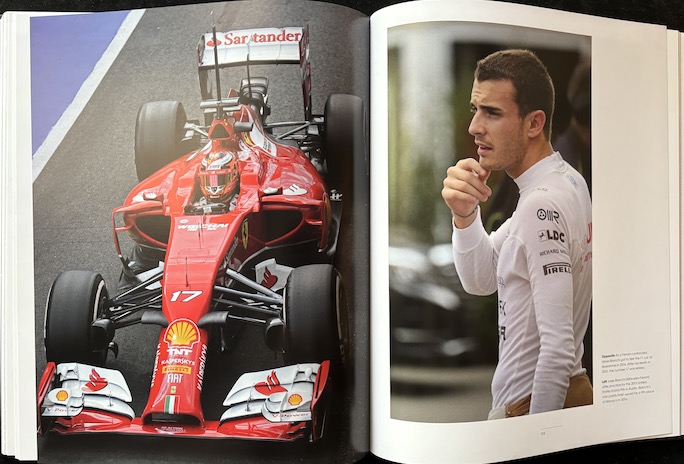
Drivers can pick their own race numbers. Ever noticed that number 17 hasn’t been seen for a while? Ever noticed a particular name on driver Charles Leclerc’s helmet?
Lively writing. Lots of quotes. Thorough and precise captions. Large—10 x 12″. Foreword by former F1 driver and current BBC pundit David Coulthard. Even though this book is published by a UK imprint of Quarto Group (the publisher that makes low book prices seem normal) it has a most un-European feature, an Index!
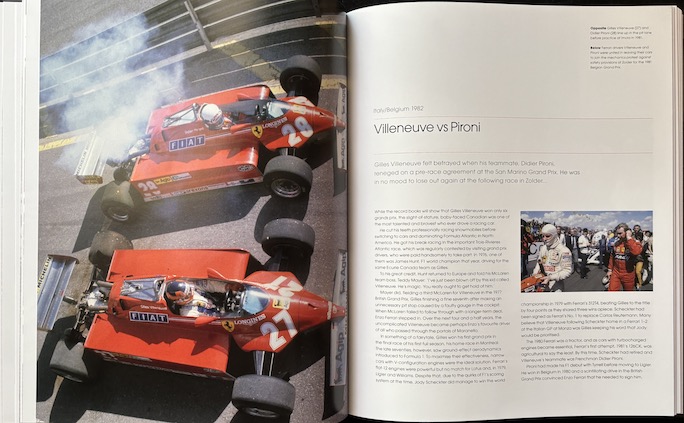
Compared to current F1 cars these look like soapbox racers. Dodgins isn’t mincing words: “The 1980 Ferrari was a tractor, and as cars with turbocharged engines became essential, Ferrari’s first attempt, 1981’s 126CK, was agricultural to say the least.”
Copyright 2026, Sabu Advani (speedreaders.info).






 Phone / Mail / Email
 RSS Feed
 Facebook
 Twitter