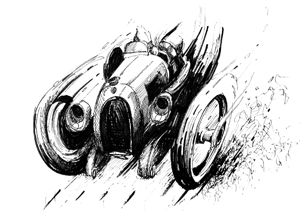

Games Without Frontiers: Volume 1, 1966–1974
Matra – Alpine – Ligier – Simca – Renault – Alpine
 by Stuart Ager
“As an adult I eagerly awaited the publication of any new book involving the French racing marques of my childhood: Alpine, Matra, Ligier. The race results were always carefully documented, yet the most interesting part of the story, the political drama behind the scenes, was missing. In France there is almost always a second accompanying narrative—one that proceeds behind a veiled curtain, one that is rarely mentioned—the invisible yet ever-present influence of the President and French politics. I resolved to research and uncover the hidden story for myself. Little did I expect a book on motor-racing to end up as a cross between ‘The French Connection,’ ‘Dr. Strangelove’ and ‘The Wicker Man.’”
In the mid-1960s, French President Charles de Gaulle made clear his wish that to demonstrate French technological superiority, French cars would be victorious in the three most coveted European motor racing events: the Monte Carlo Rally, the Le Mans 24 Hours, and the F1 World Championship. The first was easily accomplished in 1966—stealthily change the rules and disqualify all the cars in front of a French one that initially finished 5th. The remaining targets would prove more challenging. This book explores the how and why.
The initial impetus came from government financial support to build race cars and engines. The latter element was handicapped by punitive taxation resulting in no existing manufacturer having an engine greater than 1.7L, except for Citroën’s 2175 cc motor originating in the 1930s. All the usual suspects, Citroën, Renault, Simca etc were consulted and the selected supplier was … Matra, a manufacturer of space satellites and military missiles whose sole auto offering to date amounted to 200 cars per year.
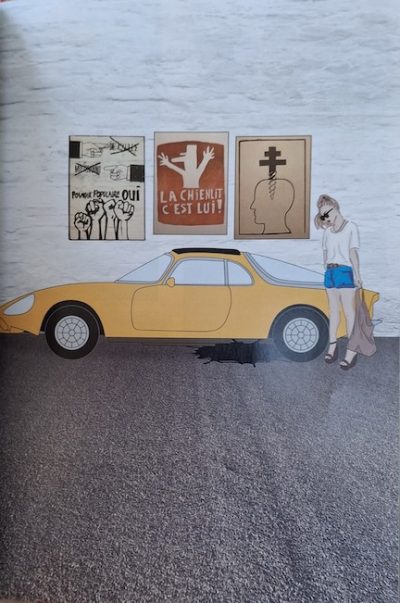
Matra Renault
As well as providing a motorsport history of the period, Stuart Ager undertakes a deep dive into the French politics that were inextricably linked to de Gaulle’s objectives. Murder, corruption, nepotism, bribery, disregard of laws and regulations, election rigging, favoritism and a lot more all come into play. Jean-Marie Balestre, a future head of both the FIA and CSI (the world’s automobile and motorsport governing bodies) was by no means the only actor with a WW2 collaborationist past. The author does not mince words when describing these activities.
This work cannot be dismissed as a typical 21st century conspiracy theory work. It is obviously not an academic/scholarly thesis that carefully looks at all sides of an issue and the author does not spend too much time fence-sitting. His sources are meticulously annotated on each page so you can re-trace his steps.
The book may raise queries about relatively trivial points. The cause of the accident that eliminated the winning Bianchi/Ogier Citroën DS in the penultimate stage of the 1968 London–Sydney Marathon still divides opinion 50+ years on. F1 BRM team owner (and destroyer) Louis Stanley is quoted on several occasions. The autobiographies of those involved (and suffering) in the final years of BRM who include Mike Wilds and Bob Evans suggest that his memoires may not be 100% reliable. Stanley describing Jean-Marie Balestre as “a formidable Frenchman not noted for diplomacy or tact” is an outstanding example of a pot calling the kettle black.
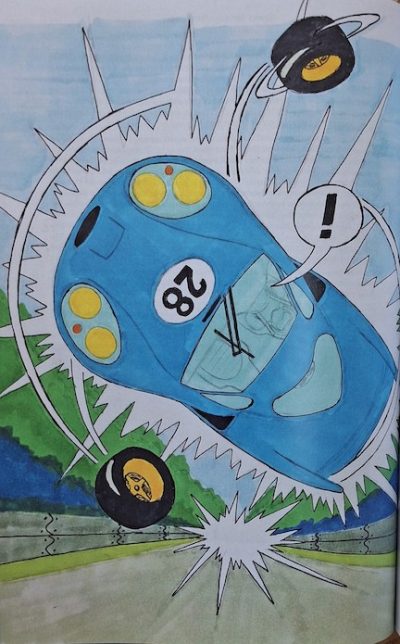
The Alpine A220 similarly had aerodynamic challenges at Le Mans in 1968.
1969 saw a second objective met—sort of. A Matra won the F1 World Championships, both drivers and constructors. The Matra engineering expertise (and cost-no-object approach) resulted in a stiffer, and faster, chassis than its competitors. The flies in the ointment were that the driver was Scotsman Jackie Stewart, the engine was the Ford Cosworth DFV, and the team owner was the English “rosbif” Ken Tyrrell. Tyrrell just happened to have won the inaugural 1967 F2 European Championship with the non-works Matra Team and Jacky Ickx.
The third leg of this triple crown could also have happened in 1969. A Matra MS650 V12 might have won Le Mans had it not lost time to repair accident damage. Ager quotes “a momentary loss of concentration by British driver Piers Courage damaged his Matra’s bodywork which cost fifteen minutes in the pits for repairs.” Adam Cooper’s biography of Courage is more sympathetic stating a Porsche 911 veered into him on the Mulsanne Straight. Time was also lost for brake repairs.
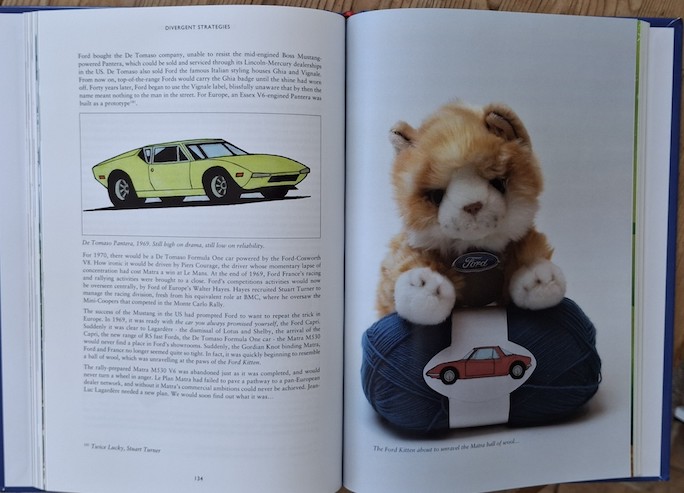
Ford’s involvement in France was not an Entente Cordiale.
It took until 1972 for Matra to win Le Mans, albeit not until there had been a change to the engine maximum capacity formula. It was a hollow victory. Ferrari declined to compete at Le Mans but won all the other races in the eleven-event World Sportscar Championship. Spookily, the co-driver of the winning car, Graham Hill, now took the other motorsport triple crown, having previously won at Monaco in F1 and the Indianapolis 500
1973 was the high point so far. Matra won Le Mans again, and also the World Sportscar Championship, the latter with some very close rulebook scrutiny. Alpine Renault won the World Rally Championship. But in 1974, driven by the global fuel price crisis, and an unsympathetic French President, it all came tumbling down. Is this the end of the story? The planned two further volumes suggest not.
The book covers a great deal more than mentioned above in this review. Examples include the lows and highs of earlier Alpine Renault activities. It describes how French driver and race car manufacturer Guy Ligier funded his motorsport (not legally) and how he was bankrupted (probably also not legally) twice. And not least the unhappy Matra/Chris Amon union. Was Matra a victim of Amon’s notoriously bad luck or was Amon the victim of Matra’s notoriously bad bureaucratic management? An unfortunate combination of both.
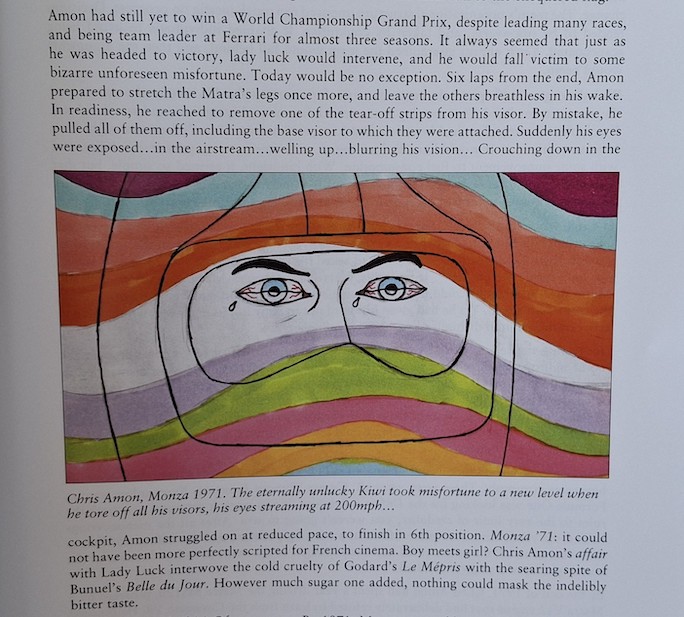
Chris Amon
The author records the shenanigans that took place at the highest levels of French government and motorsport. Ergo this is not a book that will likely be enjoyed by Francophiles. The narrative is spiced with sardonic humor and occasional bafflement and outrage.
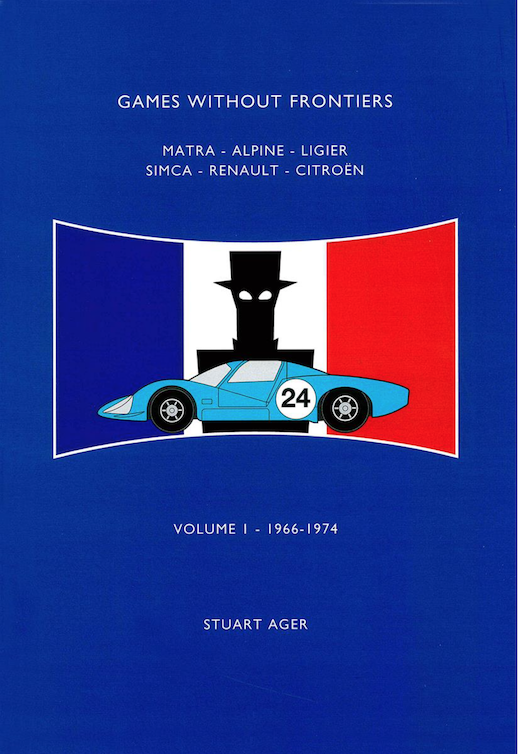
Also, perhaps it is not a book for the motorsport purist, the majority of illustrations being artwork not photographs. The illustrations are quirky but complementary to the text and likely to raise a smile. The cover sets the scene.
I suspect few motorsport books reference The Government and Politics of France in their bibliography (if they have one at all, a feature I had never fully appreciated until I started reviewing books. Ditto for an index.)
The book title? Not the Peter Gabriel 1980s pop hit. De Gaulle is often cited as one of the creators of the slapstick TV game show Jeux Sans Frontiers (which translates to Games without Frontiers but was called in the UK It’s a Knockout). He believed such a light-hearted competition would improve relations among European countries. A real competition was now actually taking place in the European Union car marketplace.
The author manages a specialist Citroën SM and DS engineering company in the UK. The publication is the first of an intended three-volume set. Work on Vols 2 and 3 has been interrupted by two other books: Citroën DS Decapotable: Eclipse of the Sun Goddess and The Last Train to Basel: Schlumpf, Bugatti and the French President. Ager’s first book was Citroën SM: Accidental Death of an Icon.
Copyright 2026, Paul Lea (speedreaders.info)







 Phone / Mail / Email
 RSS Feed
 Facebook
 Twitter