
The Story of a Stanley Steamer
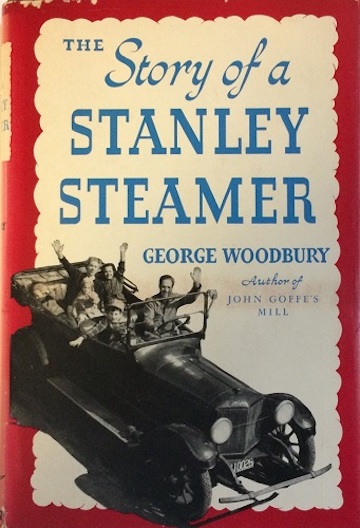 by George Woodbury
Could this all too frequently overlooked and almost forgotten volume actually be one of the cornerstones of the genre of automotive history? It was published three-quarters of a century ago by the reputable W.W. Norton Company, Inc. of New York, who surely recognized that this was a niche subject with limited appeal. The book’s small size and discreet title design on the spine tend to make it blend in on the shelf to the point of obscurity. If it did catch your eye you’re in for a most stimulating, enjoyable, and no doubt largely unexpected ride!
Author George Woodbury left his career in academia to restore and return to profitable operation an inoperable and decrepit water-powered sawmill that had been in his family for generations and to which he had become the heir. He succeeded at the task and the hard-learned lessons instilled in him an appreciation of the mechanical achievements of our Nineteenth Century ancestors, not the least of which was steam propulsion technology. The mill pond froze over every winter, thus depriving the mill of its source of power and forcing Woodbury to pursue other interests until the spring thaw.
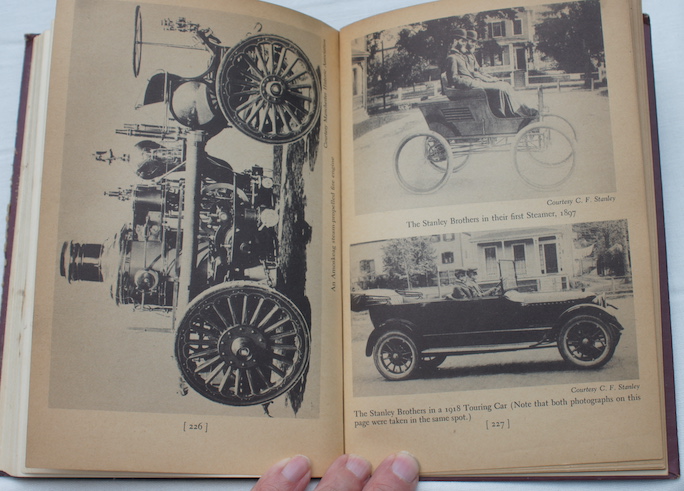
Being located in southern New Hampshire, which was considered to be within the Greater Boston area, this led more or less naturally to a developing interest in the Stanley Motor Carriage Company, which was located in nearby Newton and Watertown, MA. At this time, the mid to late 1940s, many of the principals of the Stanley company were still alive and residing in the area, some of whom were to eventually play no small role in this drama. There was also a relatively small but close-knit group of steam aficionados, many of whom were in academia and were thus professionally acquainted with the author. In those years, old-car enthusiasts were considered “nuts” or “kooks” and somewhat beyond the lunatic fringe, especially if you owned more than one old “crock” or “jalopy”. You didn’t brag about it and were most circumspect about with whom you shared that information. The legitimate need to know was established and verified first. I won’t say anything more except this is all part of the story.
And now a bit of backstory. I purchased the Floyd Clymer softcover reprint edition of this book in the late Sixties. I had misread the title in the ad as “The Story of THE Stanley Steamer” and believed that I was purchasing a history of the Stanley Motor Carriage Company so I was initially somewhat disappointed to discover my error upon receiving the book. But instead of immediately returning it I figured I ought to at least have a look first. Before I knew it, I was hooked! I then read it cover to cover while I should have been spending that time on my academic course texts. It took only a few days, and I didn’t flunk my classes. I kept the book with me over all the ensuing decades and many relocations. A couple months ago I had a sudden urge to read it once again and am glad I did! I enjoyed it much more this time than I did the first time, no doubt due to my increased awareness of many of the subtleties that went over my head the first time around. I was sufficiently motivated to acquire a copy of the hardbound 1950 first edition, signed by the author, at a quite reasonable price.
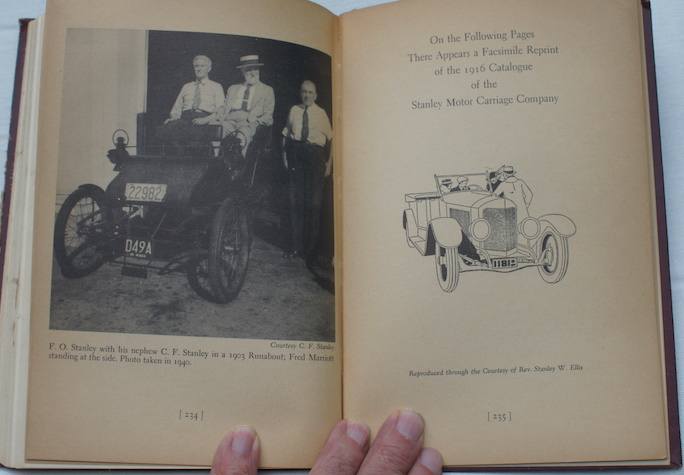
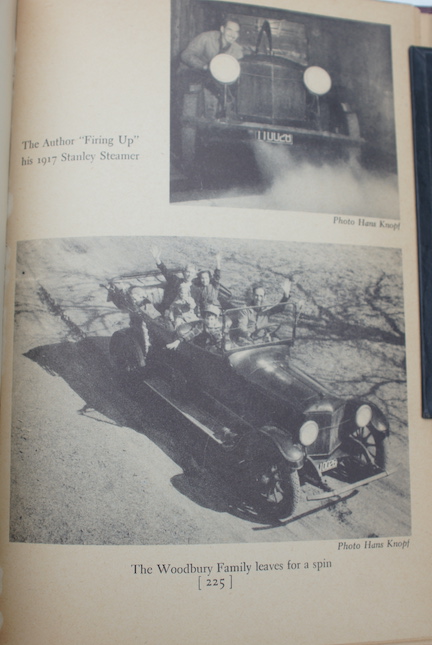
Though this is nonfiction, there are passages that read like a detective novel as George (I feel comfortable calling him by his given name. I think he’d prefer that as well.) describes tracking down leads, dealing with dead ends, finally finding the lead that led to gold closer to home than he ever expected, and all the adventures along the way that eventually resulted in returning a long-neglected 1917 condenser model 728 Stanley touring car to safe, roadworthy condition. You’ll notice that I did not use the term “restore” because at the time all this took place, 1947–1948, the car “hobby” was still in its nascent stages and restoration as we know it today wasn’t yet happening. Hemming’s Motor News had yet to appear on the horizon, future vendors had yet to realize there was a market for their services and products, and the internet was far off. The vast majority of active participants in the hobby were content to retrieve their prized relic from decades of long-term storage and neglect, spending what time and effort was needed to clean them up to make them presentable and get them running once again, and then enjoying them as time and conditions permitted, even if that meant tucking heavy wool blankets over the seats to cover the rips and tears in the original but by then often tatty leather upholstery. It is important to keep in mind that at the time the book was written, this particular car, dating from the cusp of the Brass Era, had been “out of commission and in inactive storage” for only about twenty years. Other than being exposed to the brutal cold of Maine winters, it had been parked in an unheated barn but otherwise protected from exposure to the elements and, with the exception of the boiler and associated plumbing, was basically intact and quite sound. Now, just where do you take a thirty-year-old steam car boiler that is basically a piece of junk to be rejuvenated? Thereby hangs a good portion of this most fascinating tale. You’ll have to read it to find out, and you’ll likely be astonished at many of the discoveries George made along the way.
This isn’t just the story of George’s car’s return to operability. There are several steam-related sidebar stories that add depth and human drama. A great deal of Stanley Motor Carriage Company and Stanley family history is covered. Later authors acknowledge its value and trailblazing contributions. Kit Foster mentions it prominently a half-century later in his thorough The Stanley Steamer, America’s Legendary Steam Car (2004). George’s writing style is quite readable and entertaining. The chapters are short, but even so, you’ll find it difficult to put down at any chapter’s end. Also, George wraps things up with a bit of philosophizing, which I suppose shouldn’t come at all as a surprise, considering his academic background, but he expresses concerns that are remarkably prescient and appropriate in this day and age, all the more remarkably so since he expressed them seventy-five years ago.
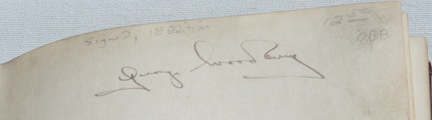
The Clymer softcover edition shows up fairly frequently on online book clearing house websites at very reasonable prices. The Norton first edition lis harder to find and asking prices vary significantly by condition. These are often signed by the author.
Beyond most highly recommended! A must read!
Copyright 2025, Mark Dwyer (speedreaders.info)
 RSS Feed - Comments














































 Phone / Mail / Email
 RSS Feed
 Facebook
 Twitter