
Archive for Author 'Sabu Advani', only excerpts shown, click title for full entry.
Races, Faces, Places: The Motor Racing Photography of Michael Cooper
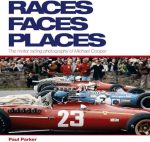
by Paul Parker
This is the sort of book you pick up in an idle moment—and hours later wonder where the day has gone. Both in terms of photographic technique and storytelling there is much, much to discover here.
Porsche Moments: Photographs from Europe and Mexico 1953–1962
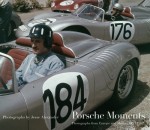
by Jesse Alexander
To anyone with a love of motorsport at the time we have come to think of as the sport’s golden age, names of photographers like Alexander are household names.
Porsche 718 + 804: An Adventure into Formula One During the 1.5 Litre Era
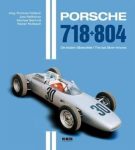
by Födisch, Neßhöver, Behrndt, Roßbach
This large and heavy book fills a gap in the panoply of literature on individual Porsche models. Maybe the reason for the previous lack of coverage is that these particular models had such an uncommonly short lifespan.
Walter Röhrl Diary: Memories of a World Champion
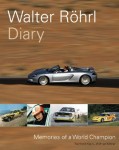
by Röhrl, Müller, Klein
“I didn’t really know why I was so fast and it didn’t really interest me.” Not exactly the words one would expect from the 1980 and 1982 World Rally Champion, a veritable legend in his field who was voted by his peers Driver of the Millennium (2000).
Yesterday We Were in America: Alcock and Brown, First to Fly the Atlantic Non-stop
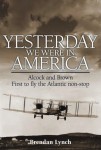
by Brendan Lynch
“Yesterday We Were in America!” Imagine saying that at a cocktail party—in 1919. This is the phrase pilot Alcock kept repeating to the crew of the Marconi radio station near which he had landed, and who simply would not believe him!
The Silverplate Bombers: A History and Registry of the Enola Gay and Other B-29s Configured to Carry Atomic Bombs
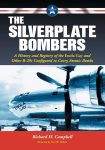
by Richard H Campbell
Nicknamed after the codeword for the project, B-29 Superfortress bombers in Silverplate configuration were the first planes ever to carry nuclear payloads. Here’s the complete story.
Automobile Design: Twelve Great Designers and Their Work
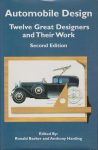
by Ronald Barker, Anthony Harding (Editors)
The book is a collection of biographical essays of 12 designers of whose work the authors say “the current state of the art owes a lot to the knowledge which other designers have absorbed from them.”
Bristol Cars: A Very British Story
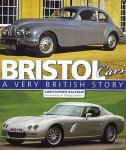
by Christopher Balfour
Bristols are rarely mentioned by people outside of GB and especially in the same breath with other luxury British marques. However the firm does rank right up there in the lofty heights as makers of hand-built, limited-production, super luxury machines.
Edoardo Bianchi, 1885–1964
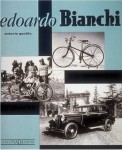
by Antonio Gentile
Bicyclists will instantly relate the Bianchi name to famous professional racing and mountain bikes. Artists may remember that Picasso had a Bianchi bicycle in his studio and thought of it as “one of the most beautiful sculptures in the history of art.”
Porsche 908: The Long Distance Runner
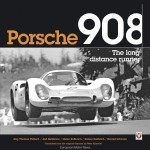
by Födisch, Neßhöver, Roßbach, Schwarz
The 908 was the company’s first car to have an engine of the maximum size the regulations allowed at the time of its inception, 3 liters. It was an important car in its day but is often overlooked nowadays, especially as it is overshadowed by its successor.
The Classic Car Paintings of Alan Fearnley
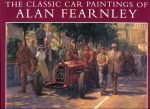
by Alan Fearnley
If you have ever visited the corporate offices of Rolls-Royce, Porsche, or Mercedes, to name a few, you may have seen a “Fearnley” hanging on the wall. Scores of corporate and private clients have commissioned his work as he is one of Britain’s foremost contemporary artists of works with transportation themes.
The Motorsport Art of Dexter Brown

by Robert Edwards
This biography in words and pictures in the publisher’s fine series on automobile art coincided with an exhibition of the artist’s “The Way We Were” series of some 50 paintings at the John Noot Galleries in England in October 2001. Brown was present at the gallery opening to sign copies of this book.









 Phone / Mail / Email
 RSS Feed
 Facebook
 Twitter