
It’s A Gas! The Allure of the Gas Station
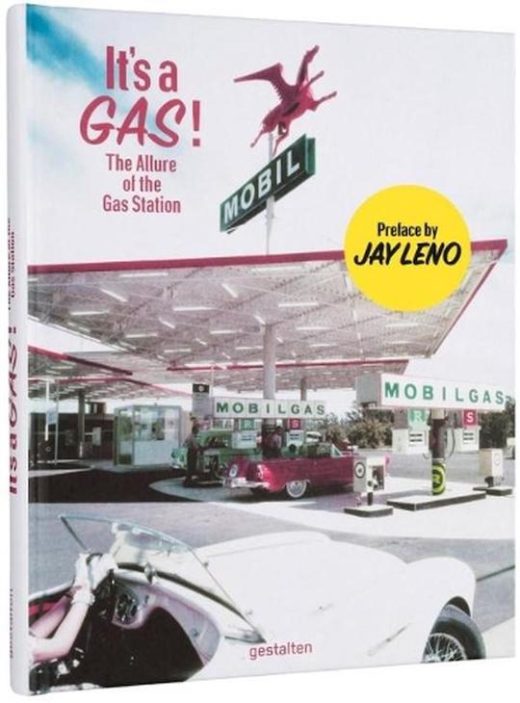 Texts by Sascha Friesike
“Wherever you are in the world, you will find people filling up on gas—under garish neon signs in Japan, outsize a corrugated-iron shack in Kiev, from a glass bottle by the roadside in Indonesia, or out of a simple gas pump. Gas stations are among the most widespread and easily recognizable types of building. Restaurants and places of worship might look different from one region to the next, but you can usually spot a gas station.”
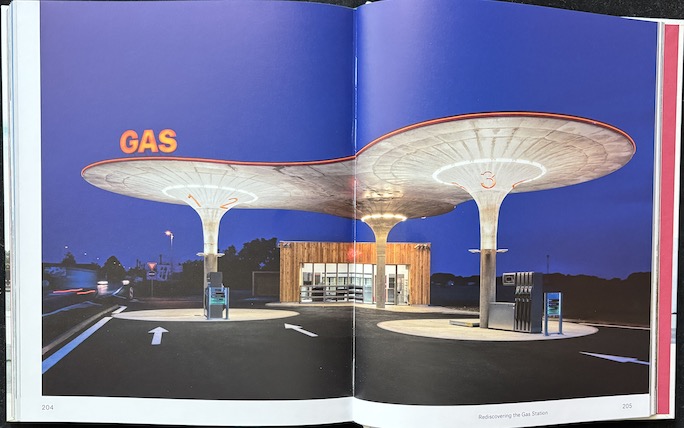
A quintessential American scene, right? How about . . . Slovakia! And this is no midcentury-modern relic; it was built in 2011!
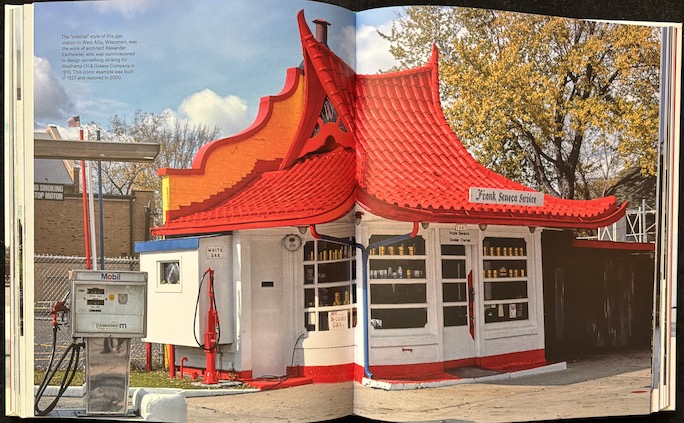
And where might this pagoda be? Why, West Allis. There once were more than a hundred of these in Wisconsin and this restored 1927 example is now in the National Register of Historic Places.
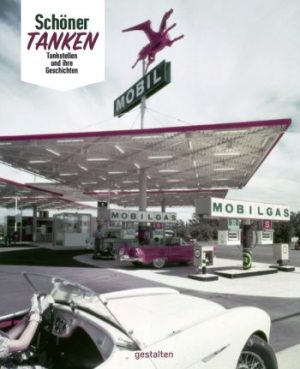 That story is told here mainly through photos, and it is the global reach that sets the book apart. “Story” is really too big a word because the narrative elements here are brief, selective, and not intended to be an academic inquiry—although the author (b. 1983) is very much an academic, a Professor Dr. who learned his trade and is now teaching it at various universities, although in fields not related to this book. His affinity for US filling stations stems from childhood trips with his parents to America where he would later also spend a year of his doctoral studies (Stanford). Not that the book tells you any of this or that this is the English version of a book first published in German, same year (2018), same publisher (Gestalten), titled Schöner Tanken! Tankstellen und ihre Geschichten (ISBN 3-89955-677-1).
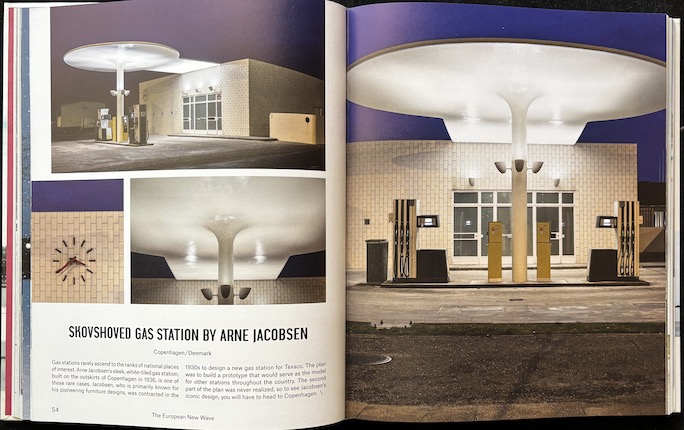
Ponder the style of building, the materials used, the lighting. Can you believe this dates to 1936? Must have been too much, too soon because after this one prototype none other were built.
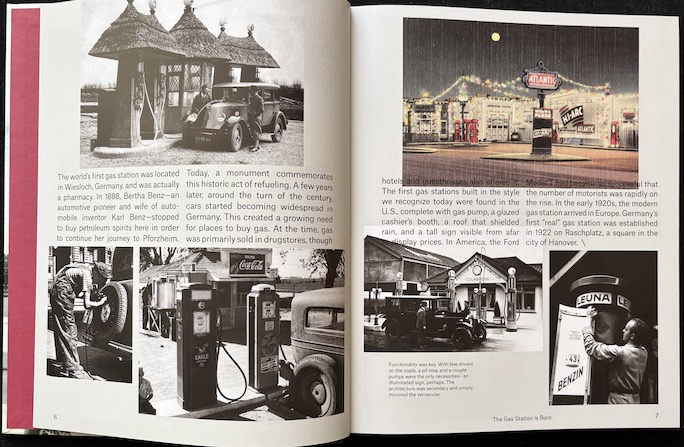
Speaking of believing: From the What Were They Thinking Dept. A thatched roof (top left) right above flammable fuel.
And from the same department: right page, top line of text. Who can read black text overprinting a dark background?! This publisher has a well deserved reputation for considered design but this is a stretch. On the upside, this book has a rounded spine. Bibliophiles rejoice.
Whether your interests run to the architectural or to armchair travel or to petroliana, you’re sure to find dots being connected here in unexpected ways, not least, to repeat, because examples from many corners of the word are presented. The point here is to showcase what all is out there rather than how it all connects, if such a thing were even possible or necessary. In other words, what you are being shown here is a good jumping off point for independent study because there really is a dearth of background in so many instances. This does not distract at all from the impact of the imagery.
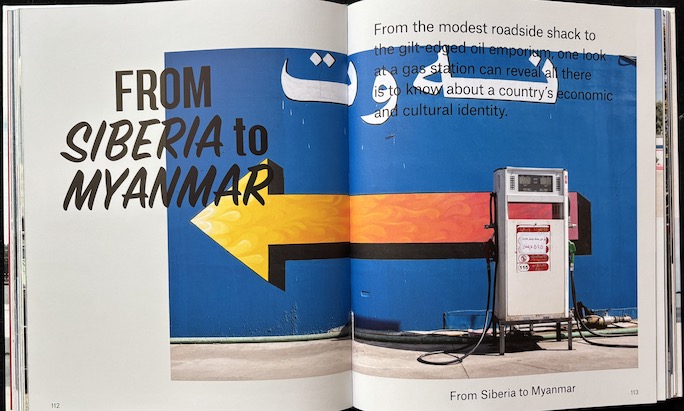 The book is divided into what might be called “themes” (see photo above) but there is no Table of Contents. Not all photos have captions (several are used more than once). The word “allure” in the title might raise expectations that the common denominator here is aesthetic appeal/relevance or cultural import; a more suitable word would have been “typology.”
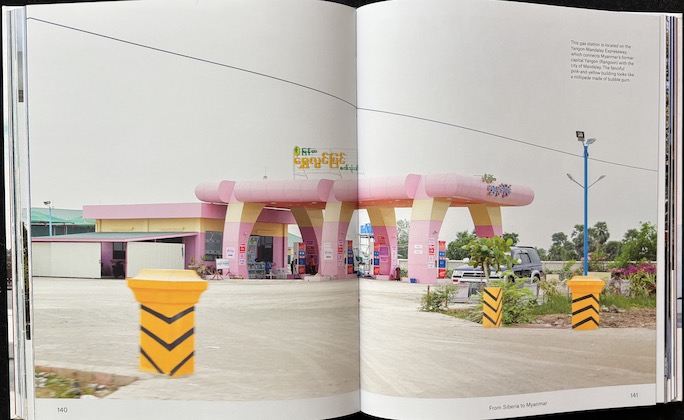
“A millipede made of bubble gum,” says the photo caption. (Myanmar)
In the form v function paradigm, a filling station must first and foremost and at all times deliver on the expected function; if it looks good while doing so, all the better. Maybe. Actually, that last factor does beg investigation: in terms of form do we expect more of a gas station than, say, a crematorium or a submarine base? Indeed we do. But why? Discuss. And consider: there is a gas station (well, a fuel barge) on the water in this book so don’t jump on the “romanticism of road travel” mythology too quick.
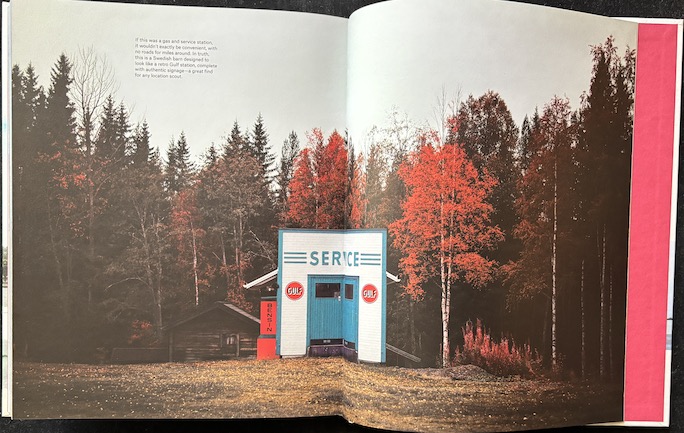
Are we there yet? What if “there” is in the middle of the forrest without a road in sight. The better question here is, “why”? The caption only tells you this is a Swedish barn designed to look like a gas station. If you can bring yourself to consult the truly infuriatingly organized photo credits you would discover the name of the photographer. And if you still care, you could then trawl the Almighty Interweb for the backstory. Good luck.
Copyright 2025, Sabu Advani (speedreaders.info)








































 Phone / Mail / Email
 RSS Feed
 Facebook
 Twitter