
Luca: Seeing Red
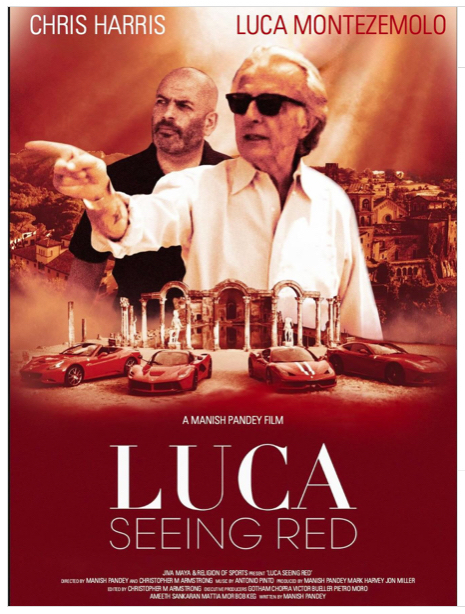 presented by Chris Harris
“After my family, Ferrari was the most important thing in my life.”
—Luca di Montezemolo
A Formula One paddock in the mid Seventies, back when even nobodies like me were welcome. It wasn’t unusual to spot a driver or even a team boss in the pit garages—no “team principals” or “sporting directors” back then, of course. Here’s Bernie Ecclestone, his appearance proving that you can take the man out of the used car lot but . . . you know the rest, right? Ken Tyrrell looks like he’s just finished a hard shift at the woodyard and Louis Stanley appears to have taken a wrong turn out of a Noel Coward farce. But who is that in the Ferrari pit, the twenty-something with the movie star looks, sporting the sharpest of suits and an effortless air of authority? It’s Luca Cordero di Montezemolo (b. 1947), the multilingual young lawyer appointed by Enzo Ferrari to lead his team out of the doldrums. And history shows that he didn’t let Il Commendatore down.
The publicity for this documentary describes it as a “love letter” by journalist and TV presenter Chris Harris to its subject, and there’s not a second in the 95 minutes running time that contradicts that description. That came as no real surprise, because the co-director is Manish Pandey, whose 2010 screenplay for the Ayrton Senna movie was a hagiography that almost beatified its subject while glossing over Senna’s faults. The doc follows Harris’ “two week odyssey” as he accompanies Montezemolo on a trip which begins in the latter’s exquisite hillside home. The hyperbolic tone of the film is epitomized by Harris’ opening words, when he describes how, prior to Luca’s appointment “Ferrari hadn’t won a race for years.” Not quite. Admittedly the 1973 Ferrari was a dog but Scuderia Ferrari had still won seven Grands Prix in the previous three seasons, as well as the World Sports Car Championship in 1972.
The movie essentially comprises a series of conversations between Harris and Montezemolo over drinks, nibbles and lunches in Bologna, Rome, and Maranello. Some are consumed in suspiciously quiet restaurants (did they pay the other diners to keep the noise down?), others in Montezemolo’s gorgeously tasteful homes (plural). Automotive props include a Ferrari F355, F360 Barchetta, F40 and a lovely Sixties Fiat 500 Trasformabile, with the latter being piloted con brio by Montezemolo through Rome’s tiny back streets.
Harris’s adoring puppy-like gaze and soft soap questioning mean that this doc is not exactly in the same school of journalistic rigor as Frost/Nixon. That said, it’s not without merit as Montezemelo is a courteous, articulate, and immensely charismatic subject with an extraordinary CV. He was Enzo Ferrari’s PA at 25, Scuderia Ferrari team boss within a year, and went on to become one of the biggest movers and shakers in Italy. Savior of Fiat, at the metaphorical helm of the America’s Cup challenger Azzurra, managing director of Cinzano, head of the World Cup Italia, and anointed by Fiat boss Gianni Agnelli as Enzo Ferrari’s successor in 1991. Oh, and high-speed trains and Gulf State Grands Prix (thanks for nothing, Luca) and much else besides.
But I bet that what most moviegoers really want to hear about is the operatic saga of the Cavallino Rampante, because who doesn’t love the saga of Enzo’s “terrible joys”? The movie doesn’t disappoint, and what elevates it is not just such eloquent personal testimony but some wonderful archive film, very little of which I’d seen before. Seventies’ Formula One cars are wonderful reminders of the huge slip angles cross-ply tires could sustain, and it was a joy to be reminded of the wonderful chaos of race paddocks of half a century ago. But the big screen close-up footage of Niki Lauda at Monza, just weeks after the Nürburgring fire? That was a tough watch, as was Lauda’s funeral in 2019, his race helmet adorning the polished wooden casket.
Even amidst the achingly good taste and World of Interiors sets, Montezemolo treats the viewer to some trenchant zingers. The Ferrari 348, reviled in period but now enjoying something of a renaissance, is crisply dismissed as “A shit car”, Michael Schumacher was “sometimes too weak”, and in the (gushing) post-film Q & A session, Montezemelo’s dismissal of Rubens Barrichello’s complaints about unfair treatment is lacerating. Most notably, we are told of the visit Ayrton Senna made to Montezemolo’s home shortly before his death at Imola in 1994. We’re left in no doubt that, had he lived, Senna would have become a Ferrari driver. Schumacher? Well, he wouldn’t. Montezemolo is now 78, and the gloves might still be velvet but the fists are pure Italian steel. Enough already, I’m sounding like Harris too . . .
Chris Harris established himself in magazines like Autocar and Evo and built his personal brand on YouTube before joining BBC’s Top Gear as the straight guy who knew how to drive. He describes Montezemelo in the film promo, preposterously, as “the greatest car boss ever.” The coolest, the guy with the most aquiline good looks and the best suits perhaps, but greatest? Not Henry Ford, Ferdinand Porsche, William Lyons, not even Enzo Ferrari himself?
This movie is enjoyable, but also insightful and ludicrous in equal measure. The lighting is exquisite, the sets gorgeous, and the outcome is more elegy than documentary. Luca di Montezemolo has charisma and style in spades, he has enjoyed a stellar career, and he knows exactly how to present himself on camera. But you have to ask yourself—is this biopic or bromance? My guess is that Luca di Montezemolo was told it was the former, but Chris Harris knows it’s the latter.
Copyright 2025, John Aston (speedreaders.info)

 Phone / Mail / Email
 RSS Feed
 Facebook
 Twitter