
Mercedes-AMG: Race-Bred Performance
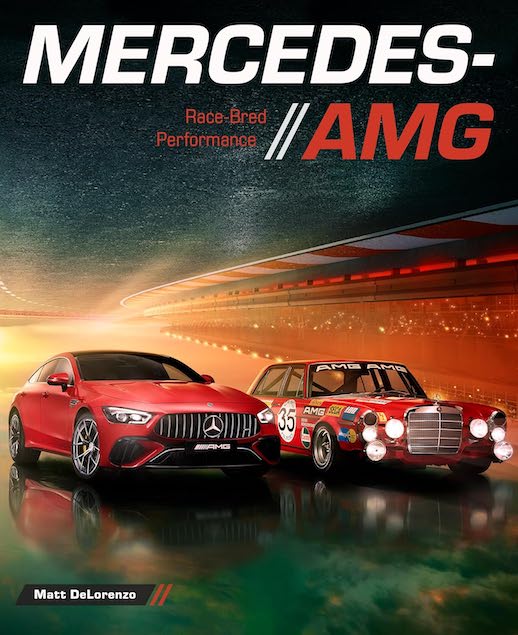
Something seems off about the cars’ relative size to each other.
by Matt DeLorenzo
“While there’s no doubt that some people agree with that sentiment and buy a Mercedes-AMG for the prestige factor of a big sticker price, fortunately for enthusiasts, there’s much more to the AMG story. There’s far more value in the cars and the way that they are engineered, built, and enjoyed than money alone.”
Founded in 1967 by two young Merceds-Benz engineers AMG started out as an independent specialty engineering firm that didn’t get much love from M-B because the firm had stepped away from campaigning their road cars and was ambivalent about outside tuners. But AMG upheld the Mercedes ethos of build quality and reliability, and proved to have staying power. So much so that some 30 years later DaimlerChrysler took a controlling interest in AMG and after a few years assumed full ownership. At each of these junctures the character of AMG changed, making for a complex story. Today, see excerpt above, AMG is an integral and lucrative part of the Mercedes universe, what DeLorenzo describes as “a pillar in the automakers brand structure” and that is the primary focus of his book. Extracurricular activities such as the Cigarette powerboats, customer racing, or affiliations or cooperations with other makers are examined only in passing.
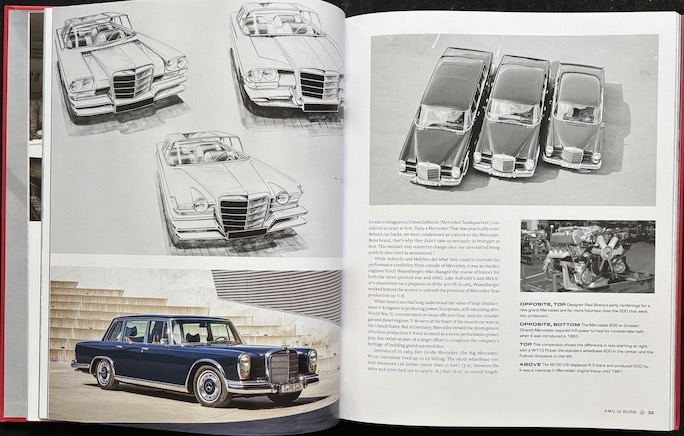
This is the world of big road cars the AMG founders stepped away from because even though they worked in Mercedes’ racing department to test engines, dyno work on production cars was all the excitement the future would hold if they stayed at M-B.
Thumb through the AMG books you may already have—there won’t be many of this full-spectrum kind—and refresh your memory as to what has already been said and shown. This new book is no copycat but advances and sharpens the body of knowledge and, obviously, brings the full history up to date, laying the groundwork for the several all-new models expected for 2026.
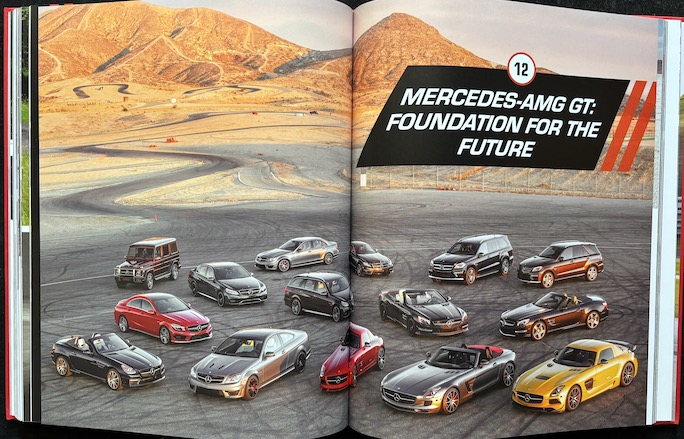
One thing the book doesn’t say is why it is being published now, and nothing in the AMG timeline yields a compelling clue—which makes it all the more puzzling that all of a sudden there is already another similarly structured book by a similarly capable author being readied by publisher Veloce for release the following year, Mercedes-Benz, The AMG Cars: A Chronological Journey Through 30 Years of Performance Icons by Brian Long. Judging by the subtitle it may be on a different tack (but will contain twice as many pages!).
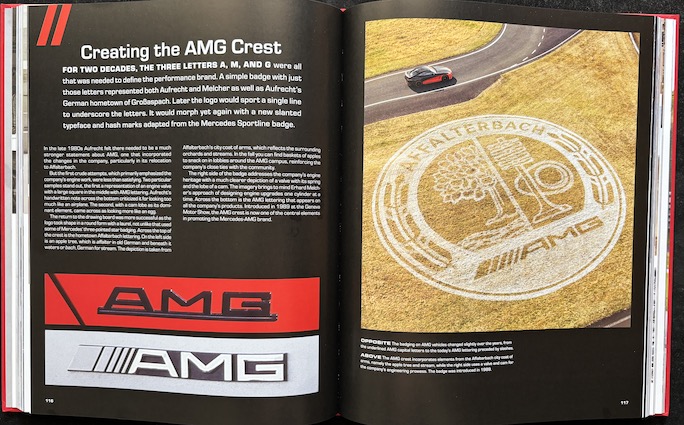
Unless you know Old German you’d need this spread to explain what apples have to do with AMG; but it does not explain how they mow the logo into the lawn.
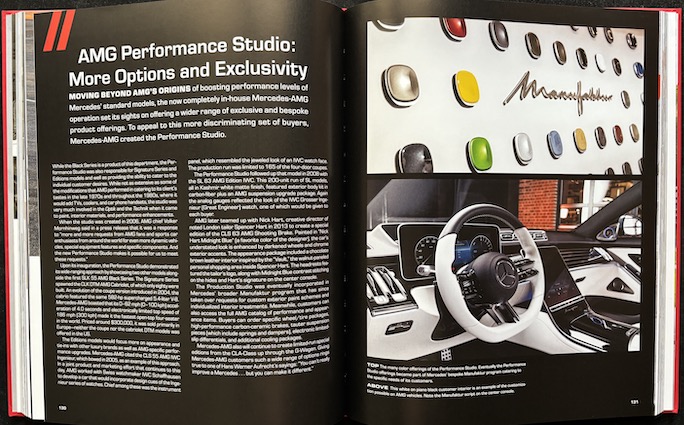
The only way to get into the Performance Studio is to check the Bespoke options on the order sheet and set some serious money aside.
DeLorenzo, a longtime automotive journalist whose name you would recognize from any number of magazine roles (including editor-in-chief at Road & Track) and several books offers here a pretty much complete history of the product range and the underlying design and engineering philosophy.
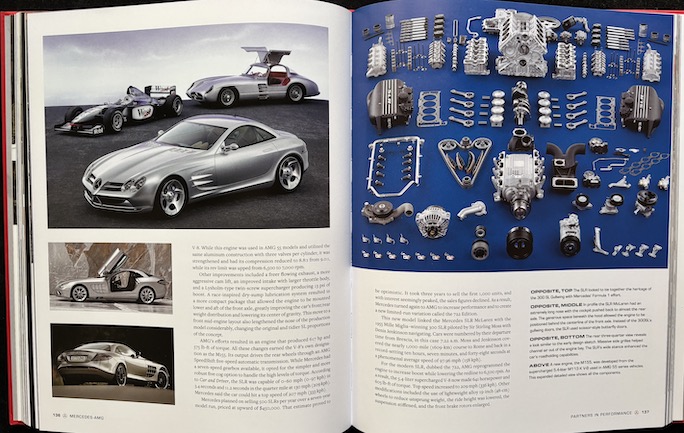
Connecting the dots: Gullwing->F1->SLR.
That the Foreword is by American racer Sam Posey is eminently fitting because as a teenager in 1958 he famously acquired a 4-year old 300 SL Gullwing (which he still owns), the model that both ended one era of Mercedes cars in motorsports and pointed the way towards a new one. DeLorenzo condenses that into a short but precise Introduction and then skips ahead a few years, to 1971, when the famous Red Pig uber-sedan established AMG as an undeniable force. One question that remains unasked/unanswered is whether AMG would have found its way into the Mercedes family if it hadn’t been started by, basically, company men.

Merely for the sake of managing expectations we will note that not much is said in terms of biographical detail about the two company founders, not even by way of a sidebar. Each of the 15 chapters ends with a “special feature” 2–3 pages long; they all contain useful things you’d absolutely want to know—if only you knew that they exist in the book at all, which you will not because they are not called out on the Table of Contents. Obviously that would have required 15 additional lines of space, which the current design (see above) would not have accommodated, but it diminishes the usefulness of the book to the power reader. There is however an Index; it doesn’t list everything that is in the book but everything that is mission critical.
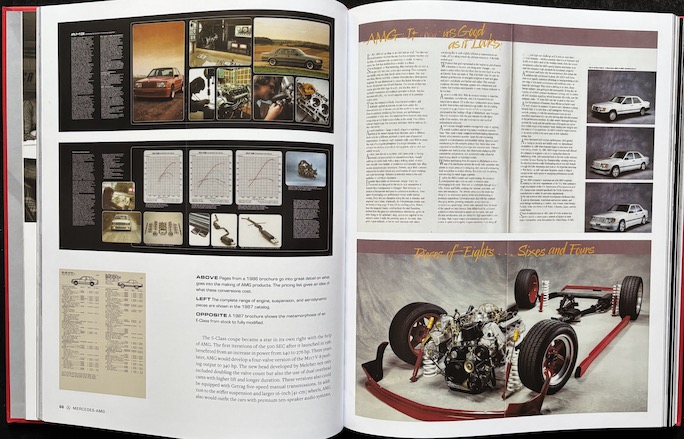
It also seems necessary to say that the pages or elements that have black background are not remotely fingerprint-friendly (even though they are satin/matte)—the book will look like a crime scene after only one read. On the illustrative side the book is very deep, including even race programs, brochures, advertisements and the like. Quite a number of the photos are from the archive of the late John Lamm to whom this book is dedicated.
Copyright 2025, Sabu Advani (speedreaders.info).
 RSS Feed - Comments













































 Phone / Mail / Email
 RSS Feed
 Facebook
 Twitter