
Aston Martin: The V8 Legacy
A Detailed History of the DBS, V8, Zagato and Lagonda Models, 1967–1990
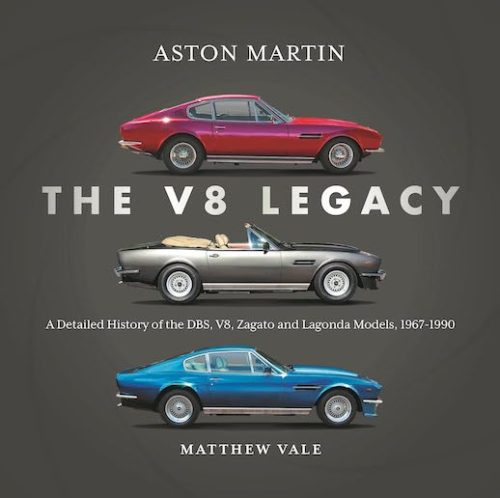 by Matthew Vale
“The DBS, DBS V8, AM V8 and Lagonda line comprises a relatively simple range of models but is leavened with a sprinkling of complexity and confusion. It has to be understood that the cars were hand-built in relatively small numbers, and very often to order, so there were many alterations and specification changes made to individual cars during construction.”
True enough but the real complexity and confusion stems from the automaker’s methods (?) of naming, retiring, repurposing model names. Never mind that the model that was “designed with the intention of fitting Aston Martin’s V8 engine” had instead to make do for five years with the aging straight 6 which adds a whole layer of complexity right there. Add to that that even the youngest model is 35 years old at the time of this book’s release, plenty of time for inaccuracies to have established itself in the record.
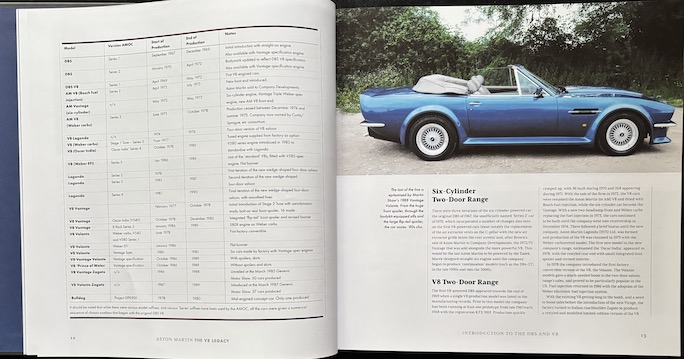
This table takes a stab at sorting out nomenclature.
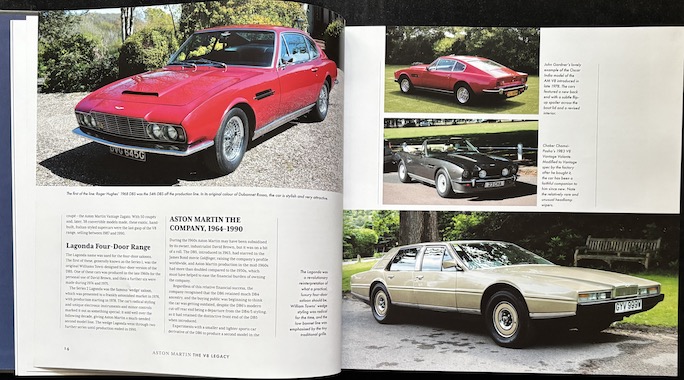
Followed by a quick visual primer.
Quick test: is it POW or PoW? How about Oscar India? If you have things to say about that, this book may not tell you much new. That said, it’s always convenient to have the basic facts of life between the covers of one book. It’s been a good many years since someone has thrown an entire book at the V8 subject, and car prices have seriously gone up by now, so author Vale is not wrong in thinking that a whole new crowd will want clarity on history, authenticity, and ownership experience. Also, he offers an annotated Bibliography and a useful Index that fills the two pages available to it to the last line so it could hardly be asked to do more (there is even a subsection on “Bond films/novels,” but Oscar India is omitted.)

(r) You may have to squint to recognize this as a DBS. And with this chapter you can add the name “The Muncher” to your AM lexicon.
With more than 20 books about various sectors of British vehicles to his name, coupled with hands-on restoration experience, Vale knows what will be useful to a reader. This book progresses in an orderly and satisfying manner, offering solid information. It is, however, hard to imagine, given the topic’s name recognition and global reach, that readers outside the UK will cherish the “clubby” tone of this tome: owners’ proper names, sometimes only their first names, sometimes in photos alongside their car, sometimes in photos of their car with their dog … it’s just all a bit … narrow. And let’s not even talk about cars or specifications outside UK/Continental markets. None of this hurts the book, so no need to dwell on it. If there is something that hurts it’s the tiny, tiny, tiny type which is most likely not the author’s doing!
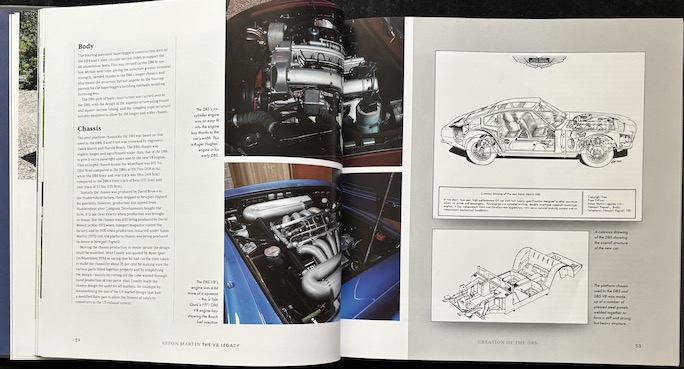
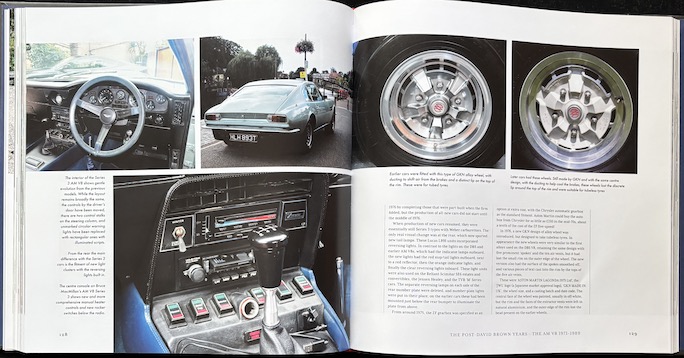
The reader new to Aston Martin history, the reader aware of the firm’s current perilous financial state, will find it a shock to the system that the book starts with just that topic—but already right back at the firm’s beginning and then pretty much all throughout its ownership by various individuals and entities (including even mighty Ford, 1987–2007). The V8 line was supposed to once and for all elevate the firm; somewhere in the book the slogan “the Rolls-Royce of sports cars” is used but even the enthusiastic treatment by Vale cannot really put a floor under that. Even the recurring reference to the V8s as “the most iconic British supercar of the 1970s and 1980s”—they did have performance specs that Ferrari and Lamborghini would have envied—is hollow but they were certainly good-looking and sounded great, which is not nothing in the supercar segment.
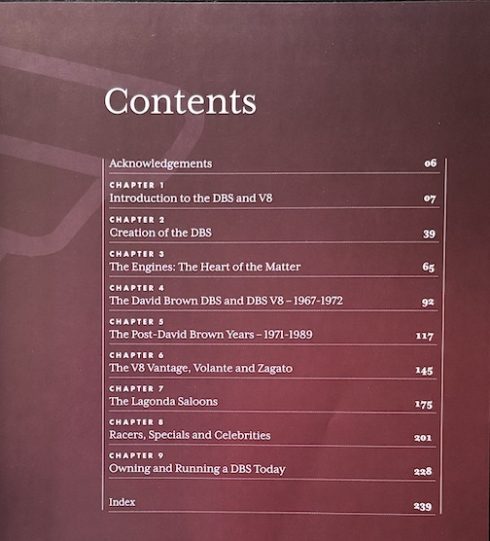 The chapter “Owning and Running a DBS Today” includes buying, restoration, and maintenance considerations, all UK-centric. While there is no arguing with the book’s claim that many/most of its photos have not been published before, that’s because a good number of them are owner-supplied from car shows or auctions and don’t quite constitute forensic coverage (and some cars are shown multiple times throughout). A few coachwork drawings and technical illustrations and the like round out the picture. A few sidebars explore ancillary topics.
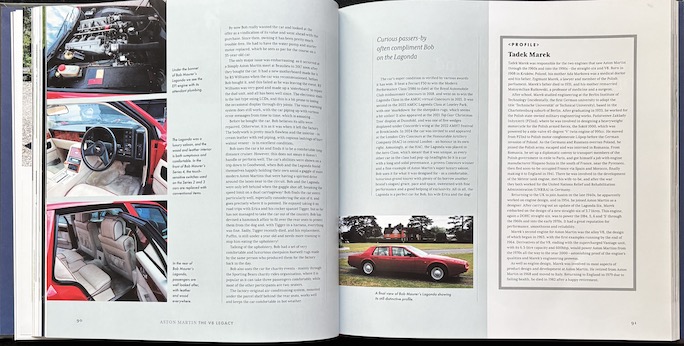
An example of a sidebar.
As one would hope and expect, all the standard production cars are presented but so are Specials, show and racing cars, and obviously the James Bond-related models. Each type/group of models ends with a paragraph titled “Conclusions” and for anyone emotionally invested with the marque it will be difficult to not wonder how the Astons of that period failed to move the needle in a lasting manner.
Copyright 2026, Sabu Advani (speedreaders.info).










 Phone / Mail / Email
 RSS Feed
 Facebook
 Twitter