
Archive for Items Categorized 'Automobiles', only excerpts shown, click title for full entry.
Zoom, The Global Race to Fuel the Car of the Future
by I Carson and V Vaitheeswaran
It is pretty clear that something has to change. The system of transportation that we have developed over the past 100 years—the one that is dependent of infinite amounts of cheap energy and two or even three new cars in every garage must come to an end in the not too distant future.
Magic Motors 1930
by Brooks T Brierley
One way to approach this book is to consider it as an essay in photos. The introduction states right away that the reader is “assumed to have some familiarity with the subject” and that the book is not meant to be “a comprehensive marque-by-marque history.”
A Gullwing at Twilight, Shifting Gears Gracefully
The Bonneville Ride of John Fitch
by Chris Szwedo
Fitch is today a living testimony to the fact that attaining a “certain age” need have no relationship to being useful or productive. One must only remain fully engaged in life and living and, of course, be blessed with the gift of good health. As proof, take a look at this DVD, gloriously filmed by Chris Szwedo,
Equations of Motion: Adventure, Risk and Innovation
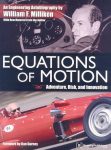
by William F Milliken
You’ve heard the saying about someone having “forgotten more than the rest of us will ever know.” This certainly applies to Bill Milliken, except that he hasn’t forgotten anything! He was 95 years old when he published the first version of this autobiography, the hardcover edition.
The Rolls-Royce Silver Ghost: Origins and Development of the 40-50 HP Model 1906–26

by David William Forward
Restoration of the author’s Springfield-built Silver Ghost showed him what an amazing mechanical creation it is and inspired him to write this book. Using disciplines of his academic background, he reviewed and analyzed the state of the art.
Equations of Motion: Adventure, Risk and Innovation
by William F Milliken
When the first edition of Equations of Motion was released in 2006, I wrote in a published review that it was unequivocally “the most interesting and well-written of the 50-some-odd books that I’d read during all of that year.” Now, with the publication of the 2nd edition, this time in softcover, you get more for less.
Morgan at Le Mans
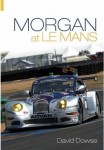
by David Dowse
Dowse describes the British sportscar maker’s 2002 and 2004 efforts at the 24-hour racing classic as “A minnow in a rather large pond.” He was Morgan’s press officer and the manager of the Morgan Works Race Team, and here offers a book that tells the tale of their epic battle against the odds.
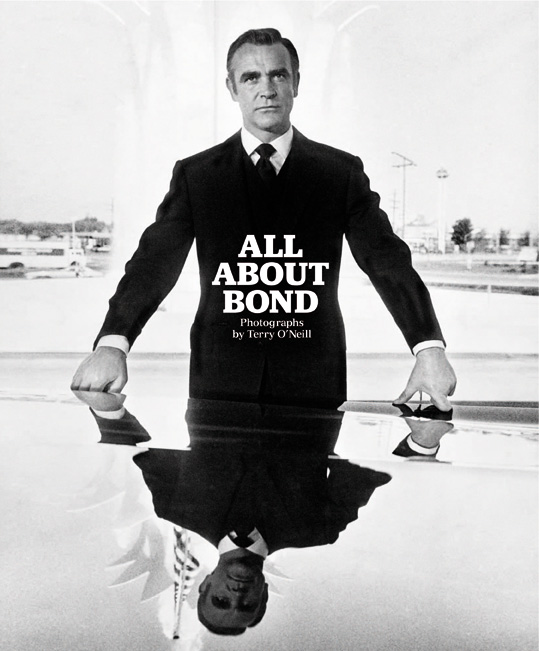
The Man Who Supercharged Bond: The Extraordinary Story of Charles Amherst Villiers
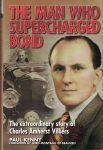
by Paul Kenny
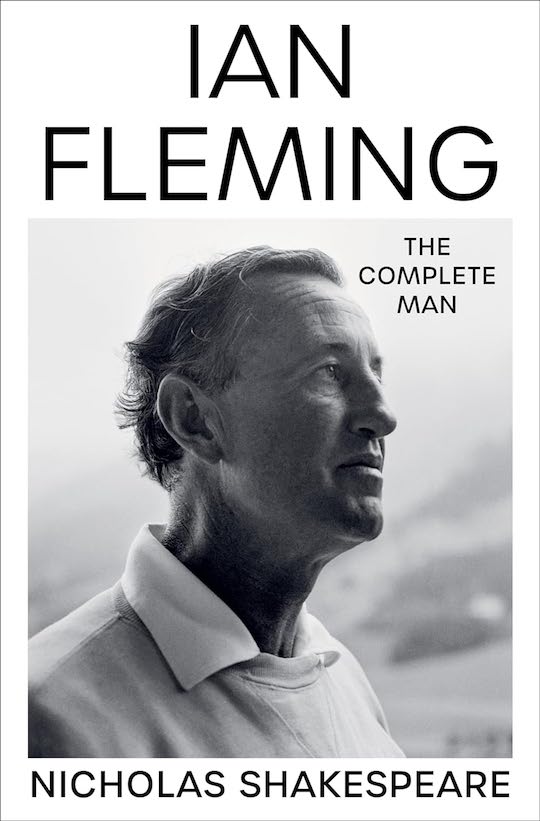
The Bond in the title is “Bond, James Bond”, created by Ian Fleming who was a friend of Villiers. Naturally, Fleming chose a Villiers-supercharged W.O. Bentley for Bond in his book Casino Royale that was later made into the iconic film of the same name.
Bentley Beauty, The Art of the Coachbuilder on the Derby Bentley 1933–1940
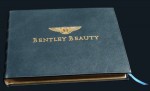
by Neill Fraser & Tomas Knapek
One of the greatest periods of coachbuilding worldwide, and one of the most interesting periods of automotive design, was that of the 1930s. Over 2400 Bentley chassis were erected by Rolls-Royce and wound up with some of the most beautiful bodies coachbuilders could produce.
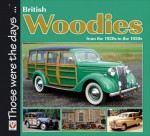
British Woodies From the 1920s to the 1950s
by Colin Peck
To an American reader, woodies may seem a quintessential American answer to a practical problem: a shortage of steel. But the Brits, too, suffered the same problem and, necessity being the mother of invention, came up with the same answers.
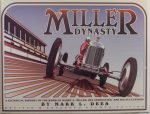
The Miller Dynasty
by Mark L. Dees
Inspired by Griffith Borgeson’s work, fellow Californian Mark Dees began to seriously accumulate Miller lore, interviewing those still living who had known or worked with Miller, along with survivors from the prewar racing world.
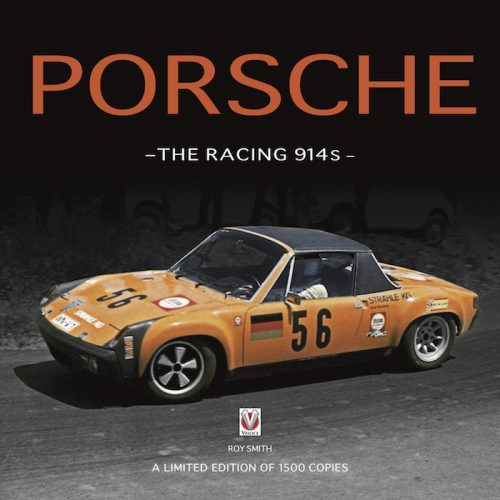
Porsche: Brochures and Sales Literature, A Source Book 1948–1965
by S Miller & R Merritt
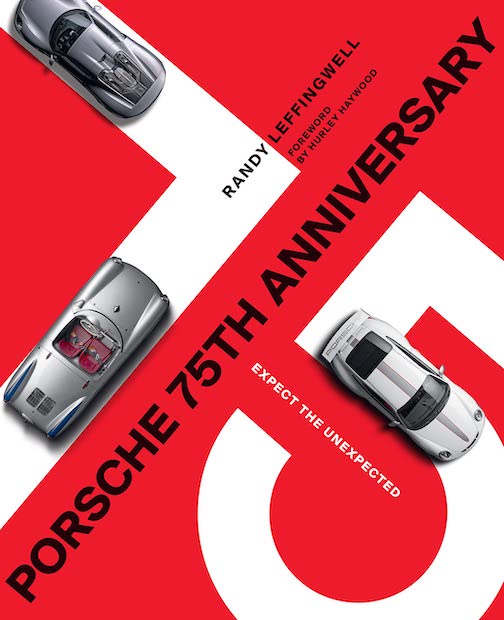
Now in its 3rd edition, this book has been revised and expanded twice since it was first published in 1978. As with most books of this type, the mere act of publishing brings forth additional information. Sometimes the volume of new material, coupled with the popularity (and sales) of the book, warrant these subsequent editions.







 Phone / Mail / Email
 RSS Feed
 Facebook
 Twitter