
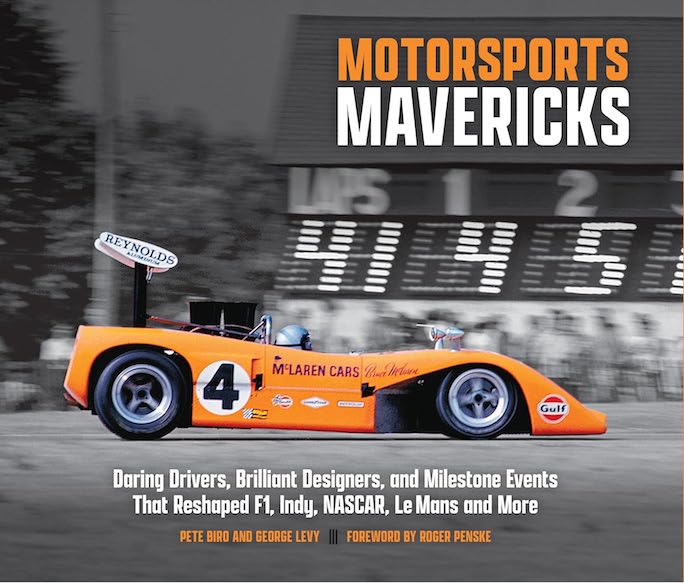
Motorsport Mavericks
Daring Drivers, Brilliant Designers, and Milestone Events That Reshaped F1, Indy, NASCAR, Le Mans and More
by Pete Biro and George Levy
“He was tall and imposing, 6 ft 5 inches, 230 pounds with a deep, booming voice. He could command a room and looked like he could break up a fight. Which came in handy when he decided the rough and tumble world of postwar stock car racing needed a single national sanctioning body–run by him.”
—George Levy on Bill France Sr
No wonder Gen Z hates us. We Boomers took all the money, bought our homes cheap, and most of us never had to worry about getting a job. We were both eye witnesses and participants in the cultural explosion of the Sixties. And, if you were a car guy, you lived through the Best of Times on and off track. Off track you could salivate over the Miura and Mustang, the E-Type, the 911 and the 250 GTO—what a time to be alive, huh? And on track? If your memory is fading, thanks to the bad acid you took in ‘67 or other youthful follies, just buy this book, because it’s the next best thing to reliving an era whose lustre never tarnishes.
I could leave it there, setting a new record for the brevity of a Speedreaders review, but you’ll want to know more.
Quick clarification: there exists already a book by these same authors, with a very similar title, and for this same publisher. It’ll play nicely with this new one.
This large, competitively priced, punchily written, and fantastically well illustrated book from Messrs Biro and Levy captures the ‘60s and ‘70s zeitgeist like nothing I’ve seen before!
What makes this book stand out is its recognition that motorsport was once a much broader church than it is now. In many places, the most common genus of modern motorsport fan watches F1 on TV and follows the likes of Norris and Antonelli on Instagram … but has never been to a race circuit. Nor displayed any knowledge, let alone interest, in any discipline outside F1, in other words is a stranger to WEC, Indy cars, drag racing, and NASCAR. What a loss; in the era this book celebrates, there was far less tribalism. Back then, loving Formula One didn’t mean you had to sneer at the thunderous drama of the drag strip or affect disdain for sports prototypes. Automotive promiscuity was just fine. And … no, I better not pursue that theme.
This book’s big, beautifully designed landscape format enables its modest 240 pages to make a big impression on the reader. The font is (perhaps knowingly?) a tad retro but I’d struggle to find much else to cavil about.
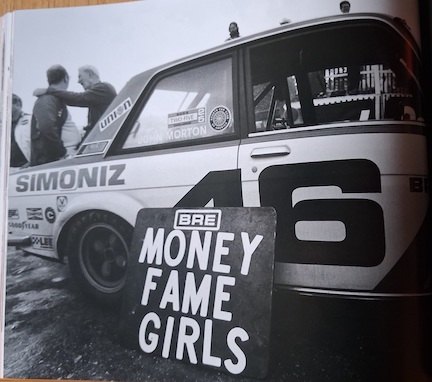
The last pit signal of 1972’s final Trans Am race, Peter Brock.
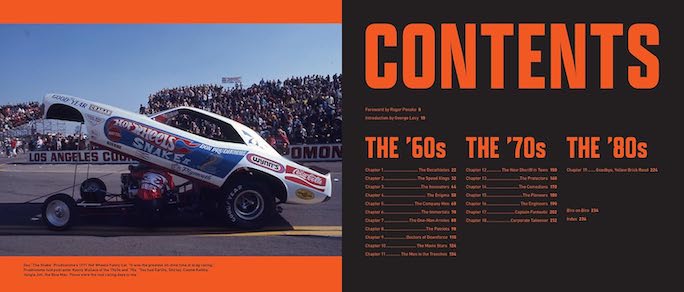
There are eleven chapters on the Sixties, seven on the Seventies and just one—“Goodbye Yellow Brick Road”—on the Eighties. Chapters are headlined with punchy titles like “Doctors of Downforce” (no prizes for guessing who), “OneMan Armies” (Gurney, Surtees), “The New Sheriff in Town” (Bill France Sr), and “Captain Fantastic” (no prize for guessing this one either; he wrote the Foreword).
Laudably, coauthor George Levy doesn’t allow his enthusiasm to cloud his judgement of the era he so obviously adored. In the 1960s motorsport was flamboyant and introduced technical leaps forward but they came at a high price, and Levy rightly acknowledges that uncomfortable fact. And, perhaps unusually for a Boomer writing about the sport that lit up his salad days, Levy doesn’t wear rose-tinted eyewear and his references and comparisons with the contemporary motorsport scene are refreshing. Trigger warning for any PETA members, there’s even Jocko Flocko [1] content.
More about the prose later but now is the time to talk about the late Pete Biro’s photos. I’m a words guy and, in my world, pictures are so often the cheap shots that screw up the narrative. But not here, because Biro’s pictures are sensationally good, and all the justification you need to buy this book. Rainer Schlegelmilch apart, there are very few photographers who capture the essence of their subject with such elan, such pure joie de vivre.
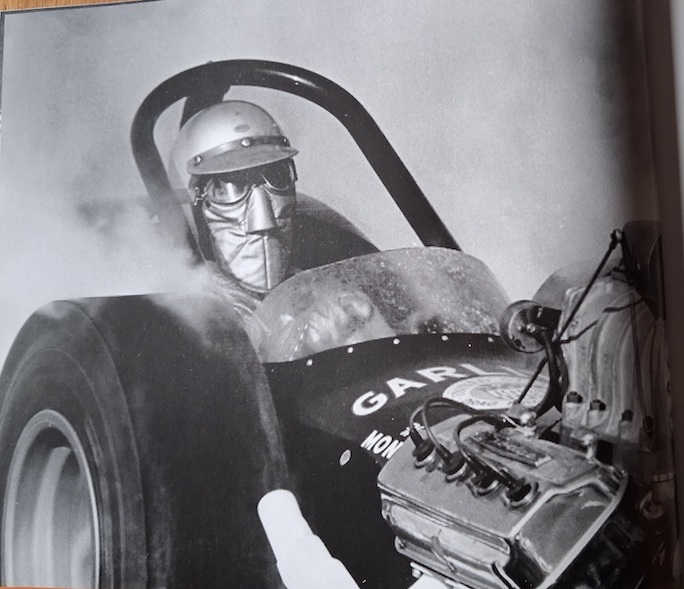
Big Daddy: Don Garlits 1965.
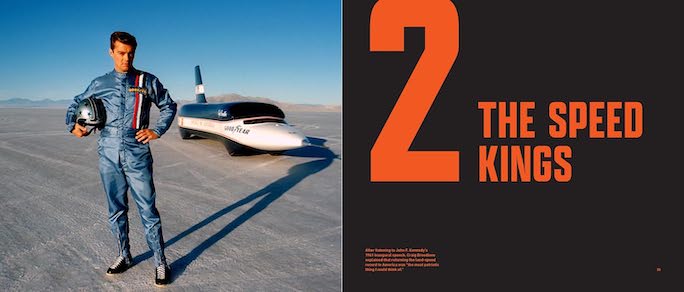
Now let’s travel back in time to 1963 where you find me reading a black and white Autocar instead of doing my Latin homework. Later, I’ll watch one of the two channels on a tiny black and white TV. Or maybe I’ll scheme how to beg a ride to the local race track next weekend. If I make it, I’ll see underpowered cars painted dull green, or drizzle-grey, driven by chaps with snaggled teeth called Clive or Norman. Now look at page 32 in this book (below) … does anything illustrate the glamor, the confidence, the sheer goddamn potency of the United States better than the picture of Craig Breedlove with Spirit of America?
George Levy writes with a confidence and fluency you can only get from deep immersion. He’s too much of a pro to gush about his subjects, but you can guess it was an effort not to do so. Levy isn’t stuck in the Jurassic era either, he’s no dinosaur who sneers at modernity and edits out the dark side of the past. He’s especially good at describing the atmosphere and mores of the sport half a century ago, and I especially enjoyed his deconstruction of the “Ken Miles was robbed” conspiracy theory that was spawned by the 2019 Ford v Ferrari movie. You know, the one where we learned that the smart way to overtake on the Mulsanne straight in your Ford GT40 Mk 2 was to drop a gear and floor it?
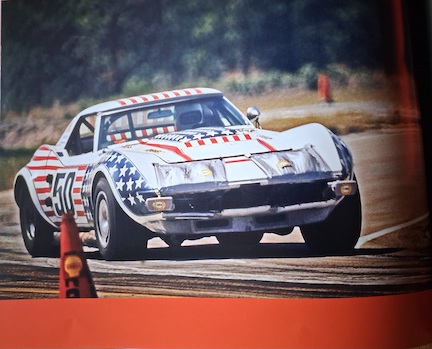
Hell Yeah. John Greenwood’s Corvette.
There are some terrific quotations too, from back when a driver didn’t have a PR drone monitoring every syllable. Here’s the Marquis de Portago, who (had he lived) would probably not have been on the late Gloria Steinem’s Christmas card list: “He was just a terrific interview. Everything he said was quotable. Like I asked him how he met his American wife. He said ‘One doesn’t meet American girls; they meet you.’ What did she think about your racing bobsleds? He said ‘I do not ask her, I am Spanish.” And here’s the ever-quotable Sam Posey: “When the Can Am teams showed up at St Jovite, few of them understood aerodynamics. By the time they left, they all did.”
There’s not a page in this wonderful book that fails to delight. You’re already hooked by the time you’ve read the dust jacket, which speaks of “a time of EXTREMES, LEGENDS and INNOVATION … a window in time that would open, and just as certainly close. Racing will never be—can never be—like that again.” Remove the dust jacket, with its lovely image of Bruce McLaren in his eponymous Can Am racer, and there’s an even better picture, an arresting b/w shot of the unfairly advantageous Penske Ferrari 512M.
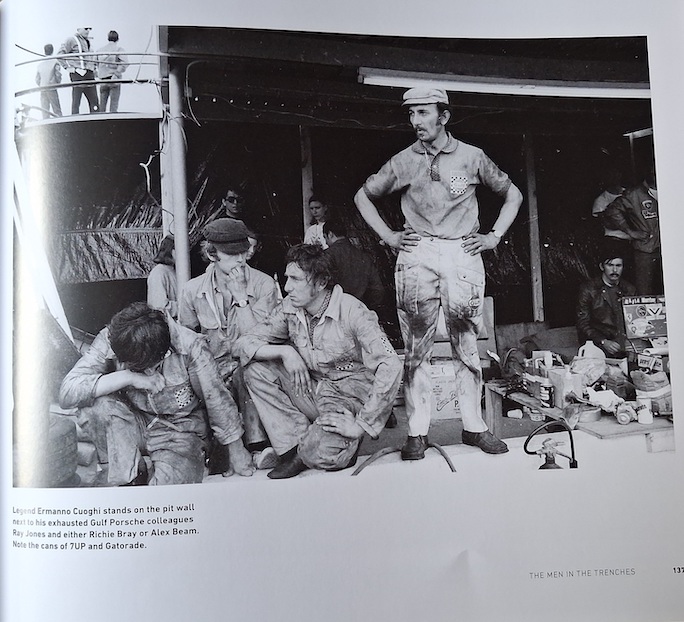
Gulf Porsche mechanics. 7Up or Gatorade?
Pete Biro’s pictures aren’t close-cropped shots depicting a race car but little else, and they delighted this reader with their wealth of peripheral detail that elevates the book from record to elegy. Savor these images, the grimy overalled mechanics working on a Ferrari 1512, helped by driver Lorenzo Bandini; the white ghost Chaparral 2J looking like an intruder from Area 51 in the Laguna Seca paddock, and Don Prudhomme tending to his Hot Wheels Funny Car under a blue Californian sky. What a time to be alive …
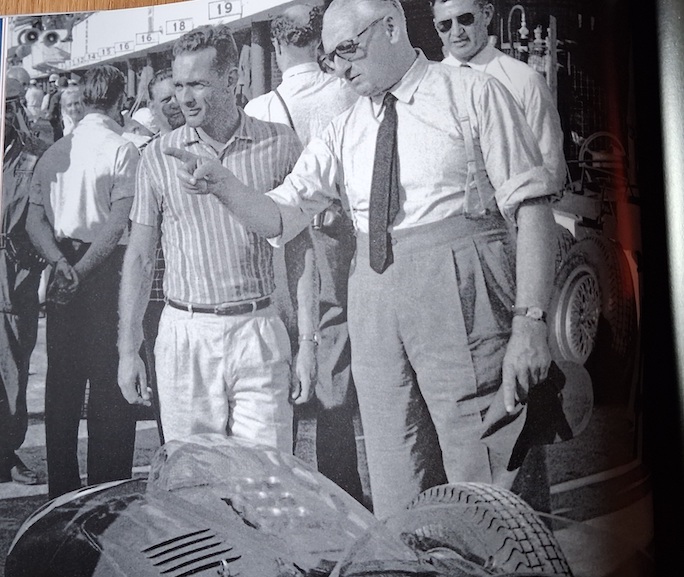
Enzo Ferrari (r), Phil Hill 1961.
You need to buy this book—it’s a keeper, a delight, and guaranteed to make you smile. Think of it as your favorite album of the era (Revolver, and Forever Changes, since you ask) because it’s All Killer and No Filler. [2]
- Jocko Flocko was the Rhesus Monkey who rode shotgun for NASCAR driver Tim Flock.
- Sum 41’s album is from 2001, but the mots are juste.
Copyright John Aston, 2026 (speedreaders.info)






 Phone / Mail / Email
 RSS Feed
 Facebook
 Twitter