
Paolo Martin: Visions in Design
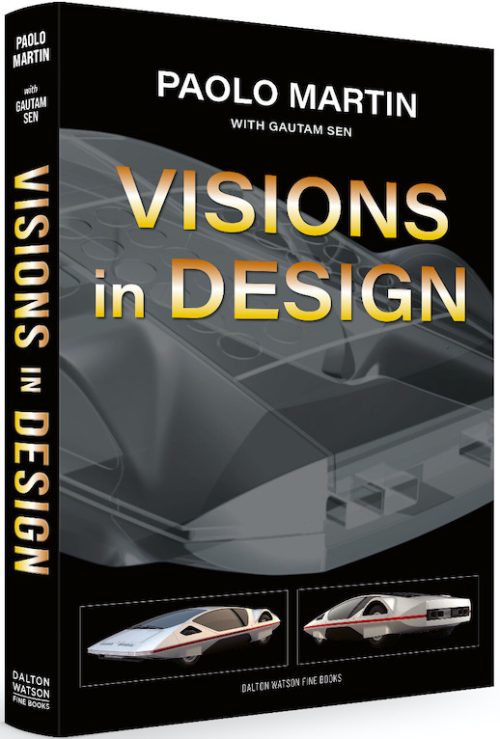 by Paolo Martin
“Not following the conventional route and always thinking out of the box, the tendency is to interact unconsciously in an instant and fast way, so fast that most of us won’t have the time to notice. What I will explain later in the pages of this book is none other than the result of what my ‘unconsciousness’ whispers to me, those ‘magic’ moments that, in the span of over fifty years, have helped me realize absolutely every one of my dreams.”
How did you spend your Covid lockdown? Italian industrial designer Paolo Martin, who doesn’t do well with idleness, spent it redrawing some of his classic designs from half a decade before—and realized they were the right answer at the time and followed sound thinking (or inspiration). In other words, he would do them again today just the same way, which is not to be read as looking identical in every line and proportion but embodying the same design essence. This is a complicated thought in the abstract but this profusely illustrated book (over 1100 images on 304 pages) will make it easier to follow. One thing that is not easy to follow is the smallish type. Martin (b. 1943) must have better vision than most (yes, yes, pun alert); he never had a design for a magnifying glass in his oeuvre which ranges from dog beds and ice cream machines to whole buildings. And cars, trucks, motorcycles, bicycles, boats, planes. And a tank.
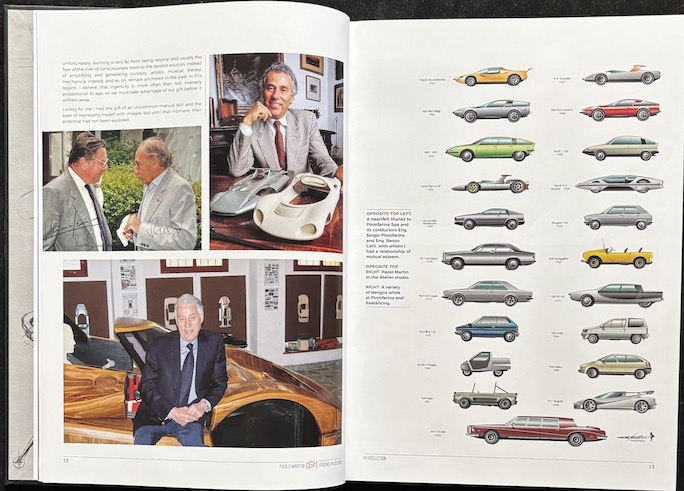
The cars on the right are just a fraction of Martin’s output. It is interesting to note how many more concepts there are than series production. In which category do you think the one on the bottom, a Stutz Royale, belongs?
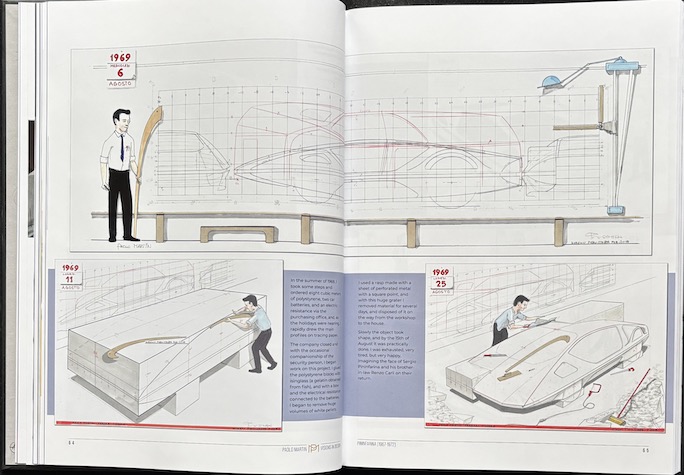
From the types of paper used in a design studio to how to manipulate a drawing table, the book starts out with a great many practical considerations. A telling anecdote from early in the book: Why do some people sharpen their pencil on both ends? The answer is obvious once you think about it, but you have to think about it. No one at Studio Tecnico Michelotti had so when Martin introduced this “innovation” he made a splendid first impression.
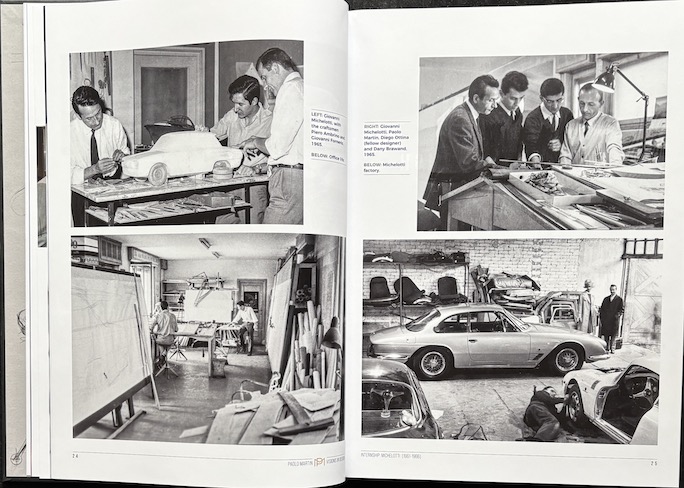
At Michelotti, 1965.
That cover car, for instance, is the famous Modulo, a Ferrari 512S first shown in 1970 (“the craziest dream car in the world”). In this book you will discover a little known fact: that idea came to him while designing the dashboard of the 1969 Rolls-Royce Camargue (below), the most expensive car in its day and the most polarizing and unloved Rolls-Royce design then and now. Which does not unsettle Martin: he likes “to create problems for the sheer pleasure of solving them,” which, to use another quote from the book, “may take 3 seconds or 30 years.”
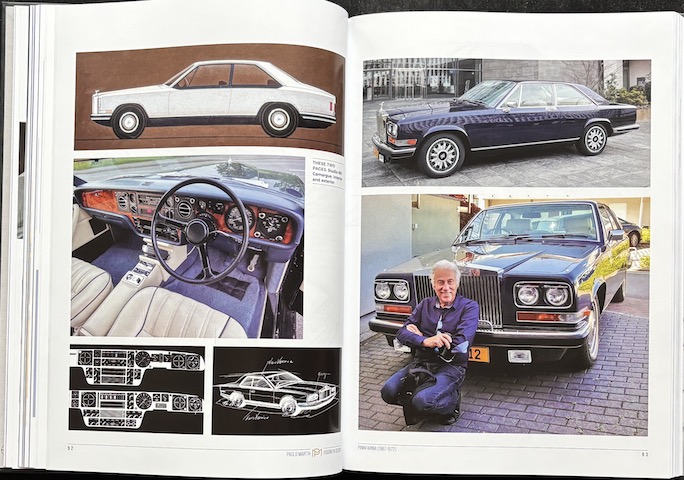
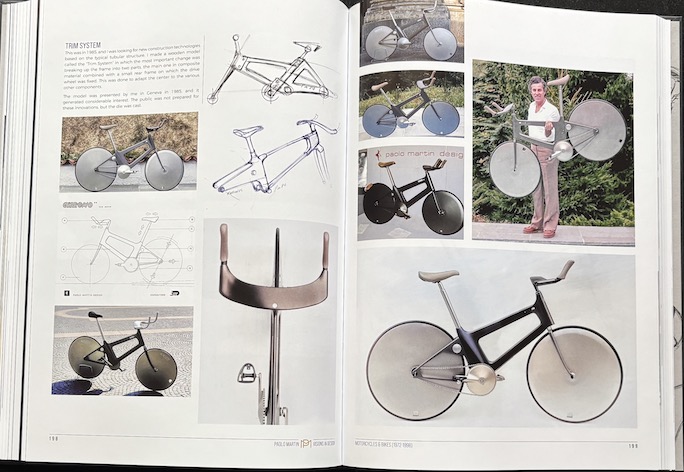
This book is not so much a catalog of all that output but an overview and a guided tour to this thinking. Having worked for Michelotti where he stated in 1960, then Bertone, Pininfarina, and De Tomaso and Ghia, cars make up the bulk of the book, in that order and then culminating in four decades of freelance work. The remainder of the book deals with other modes of transportation and all manner of industrial design. A detailed Table of Contents and smartly subdivided Index make it easy to find everything.
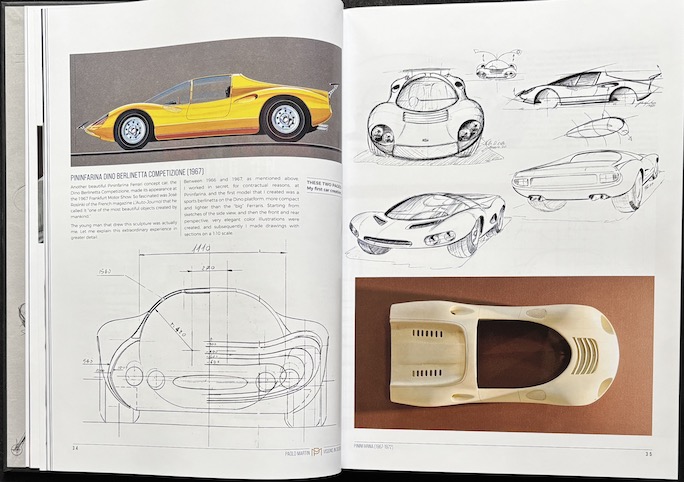
The 1967 Dino Berlinetta Competizione, Martin’s first design at Pininfarina. In period the corporate suits diluted his design with spoilers front and back and a different front air intake so when Martin revisited his original drawing during Covid he reinstated the features the car should have always had.
Looking at the Index is in fact a humbling experience: how is it possible that one man had this variety of ideas in his one head, and this many different clients? The writer of the Foreword wonders the same thing; that would be Rodolfo Gaffino Rossi about whose credentials nothing is said: he is the director of MAUTO, the Museo Nazionale dell’Automobile who also once worked at the Fiat Styling Center and is thus eminently qualified to put Martin’s work into context. Both he and Martin himself make it clear that Martin works by himself and alone, whether that means operating a drawing machine or a lathe. It boggles the mind! He is in his Eighties now and still not out of ideas.
The book is edited by Gautam Sen for whom all this is familiar territory because he is an accomplished writer and design specialist himself. Unless you are a design aficionado already you may not realize how outsize a footprint Paolo Martin has so a book like this serves a good and grand cause and will provide hours, days of stimulating thought.
Copyright 2025, Sabu Advani (speedreaders.info).
 RSS Feed - Comments













































 Phone / Mail / Email
 RSS Feed
 Facebook
 Twitter