
Life on the Wilds Side! My Half Century-Plus As A Professional Racing Driver
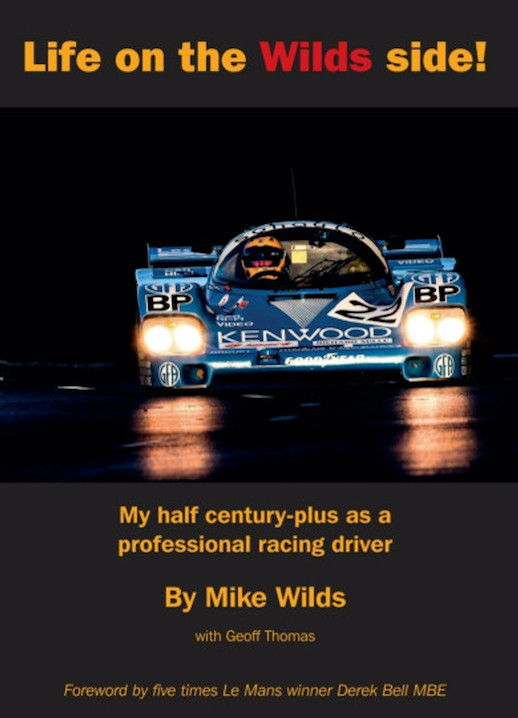 by Mike Wilds
“Mike Wilds enjoyed international success in sports cars, raced for Ensign and BRM in Formula 1 in the 1970s, won races in Formula 3, tested a plethora of cars, coached many drivers, piloted fixed wing aircraft and helicopters, made many friends (and very few enemies), raced at Le Mans and has known many star drivers such as James Hunt, Derek Bell, and Jody Scheckter.”
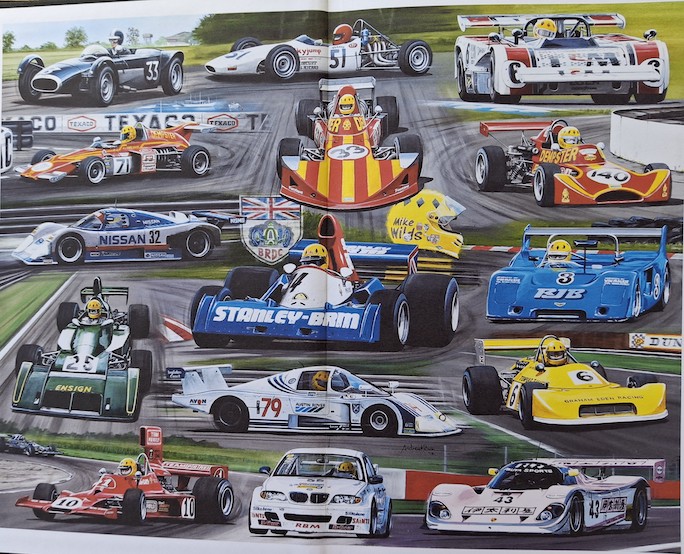
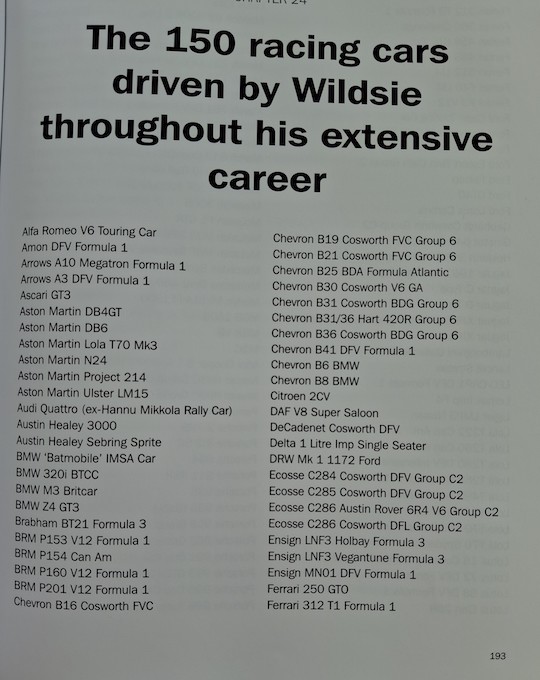
William Michael Wilds (b. 1946) started racing in the mid-1960s and was still on track in 2022. He started 3 Formula 1 Grands Prix—for Ensign in 1974 and Stanley-BRM in 1975. But this story is much, much more than these fleeting outings. Over his racing career he has driven over 150 types of racing cars from F1 Ferraris, BRMs, Lotus, McLarens etc. down to Citroën 2CVs via Ecosse, Nissan, and Porsche sports cars.
He started his career as a Firestone tire technician which was a marvelous intro to international motor racing. Starting off competing at the lowest rung—at 750 Motor Club events, he worked his way through Formula Ford, Formula 3, and Formula 5000 to Formula 1—which included testing with Surtees.
The termination of his brief Formula 1 career did not discourage him. He was appointed as the Competitions Manager for the British Racing and Sports Car Club which kept him involved in the sport. The acquaintances he made led him to be offered drives across a wide range of machinery, something that was to continue. International racing returned when he drove for the Ecuire Ecosse sports car team in the 1980s and subsequently Nissan. His last World Championship race was Le Mans in 1988 for Nissan; he was less than halfway through his track career at this point.
Wilds started racing at a time when a ticket for spectator entry at British circuits invariably bore the words “Motor Racing is dangerous” on the back. If it’s dangerous for spectators it’s more so for the drivers. Early in his career he had a massive crash at Brands Hatch (Paddock Hill Bend) that left him unconscious for a week. In 1983 a conflagration at Donnington Park hospitalized him again for two weeks. And a crash at the 1994 Goodwood Festival of Speed in the ex-Gilles Villeneuve Ferrari 312 T3 nearly led to his legs being amputated. Despite all of this Wilds never lost his joy and enthusiasm for racing, including with his two sons.
Not content with his racing activities, Wilds has enjoyed a varied career elsewhere. He learnt to fly fixed and rotary winged aircraft and became an instructor. He has also undertaken support track days, and race driving instruction.
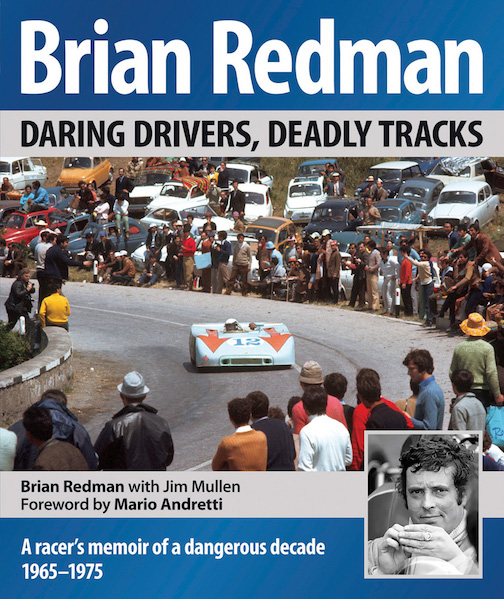
This book is not just about Wilds and his racing. As mentioned above he has been involved in many other activities. His love of family and (many) friends shine through. He states that the motivation for writing the book came from family and friends, and also to let his grandchildren know what their grandfather got up to. Contributors to the book include Derek Bell, Ian Flux (whose own autobiography For Flux Sake is recommended), Brian Redman, and Mark Blundell. The book is co-authored by Geoff Thomas, a reporter for Motoring News who crossed paths with Wilds when he was achieving success in Formula 3.
 Wilds was one of the drivers I saw during my motorsport formative years, in the 1960s and 1970s. I saw him on many occasions at the Crystal Palace and Brands Hatch tracks. Back then it was inconceivable that any one I saw would still be racing 50 years on! He is (somewhat) fortunate to be a survivor. He was deeply affected by the death of his friend, Austrian driver Helmuth Koinigg at Watkins Glen in 1974.
Back in the day my motorsport reading was courtesy of magazines like Autosport and Motor Sport. These would inevitably and understandably focus on the big names (what changes?). Wilds wasn’t one of those but nevertheless has an interesting and entertaining story to tell. In a similar vein—and for a similar period—From Mechanic to Formula 1 by Geoff Lees and Happy Lucky Days by Bob Evans are both worth tracking down—the latter sharing with Wilds the misfortune of believing Louis Stanley during the sad, final days of BRM.
This book was printed in a limited edition of 400 (which may account for the not insignificant price) so it may need a bit of tracking down. Plenty of photographs (reproduced in good quality) but no index. If you like reading about detail behind all kinds of levels of the sport, both amateur and professional, this is definitely worth considering.
This is the first book by this publisher (founded in 1996) being reviewed here so it is worth quoting their slogan: We offer books that WE want to read.
Copyright 2025, Paul Lea (speedreaders.info).








 Phone / Mail / Email
 RSS Feed
 Facebook
 Twitter