
Spreading My Wings
One of Britain’s Top Women Pilots Tells Her Remarkable Story from Pre-War Flying to Breaking the Sound Barrier
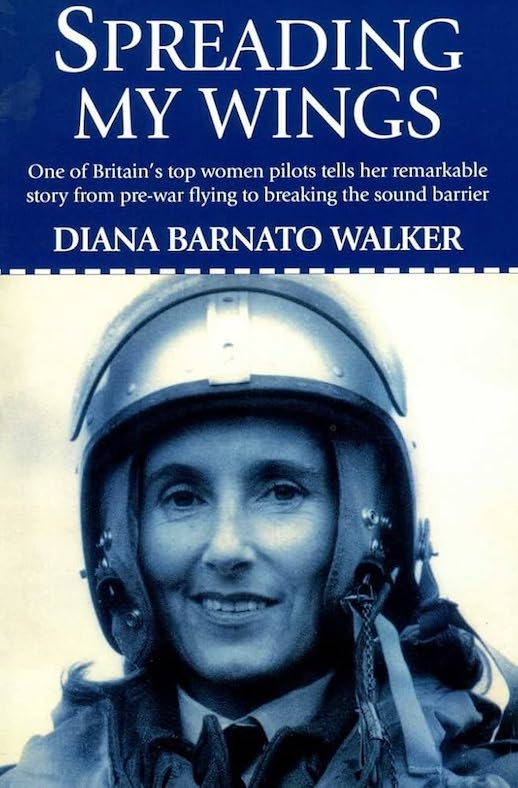 by Diana Barnato Walker
“In those days I was far too much of a snob to learn to fly with what I thought would be the ‘hoi polloi,’ even though it would cost only 7/6d [about $1.85 in 1937] per hour. So I took myself up to the top flying club which was situated in the very centre of Brooklands racing track where I had often watched my father race Bentleys and other cars in his hey-day. If he had driven there, I would fly there. (Lessons here would cost eight times as much.)”
Obviously, this is going to be an interesting bit of aviation history but readers from the motorsports side should also take note: the first part of the author’s surname is indelibly linked to an important chapter of British racing.
She was born in London in 1918 as the granddaughter of South African diamond millionaire Barney Barnato (who co-founded the De Beers mining company) and the daughter of Bentley Motors Chairman and three-time Le Mans winner Woolf Barnato. Her mother was American.
She grew up in surroundings not quite Downtown Abbey but not far off. Her tale of how her grandfather earned his fortune includes (lots of) diamonds, financial skullduggery, mysterious deaths, more than one case of blackmail, and numerous family feuds. An expansive mini-series beckons?
She remained close to her father even after he divorced when she was aged four. A visit to her father’s country house resulted in her meeting Ettore Bugatti and being a passenger in an all-Bugatti speed trial around the grounds. Her privileged childhood included skiing holidays in her mother’s chauffeur-driven Hispano-Suiza, and visits to the USA and Hawaii. Although on one of the trips “I saw the Franklyn [sic] lying upside down … Gra[ndma] was lying squashed beneath it.” She later had a Bentley as a 21st birthday present.
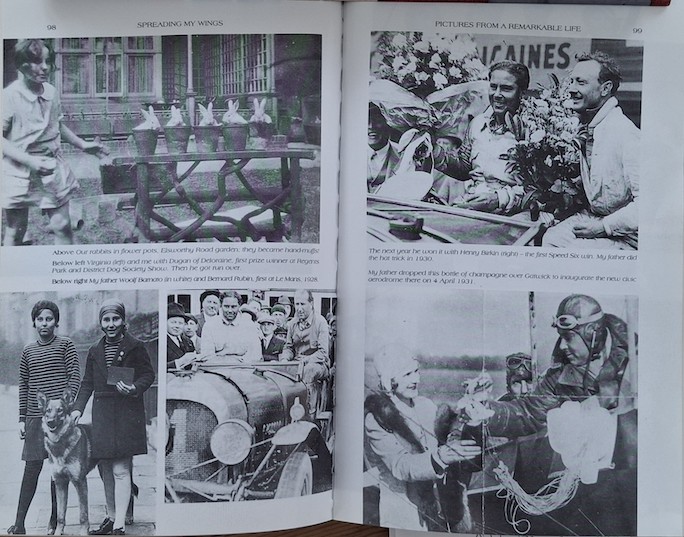
Top left corner: Diana was upset when her childhood pets were recycled as hand muffs.
In 1936 she “came out as a debutante” in a formal social presentation at Buckingham Palace. She also learned to fly solo after six hours tuition. This was at a time when aviatrixes such as America’s Emilia Earhart, England’s Amy Johnson, and New Zealand’s Jean Batton (“the Garbo of the skies”) were establishing long distance flying records.
Following the outbreak of WW2, she became a Red Cross nurse and then an ambulance driver in London during the Blitz. At this time the Air Transport Auxiliary (ATA) was formed to ferry aircraft around the country. A shortage of pilots—the Battle of Britain having priority—meant that within a short space of time women were actively encouraged to join, unlike what was to happen in the US. Barnato Walker’s enrolment was postponed six months by needing to have her face rebuilt after a horse riding accident. She reckoned this delay likely saved her life. Nearly one in six of her cohorts perished, including Amy Johnson who died delivering an Airspeed Oxford. But overall female pilots in the ATA had a lower accident rate than their male counterparts. By the end of the war she was one of the 108 “Atagirls” employed.
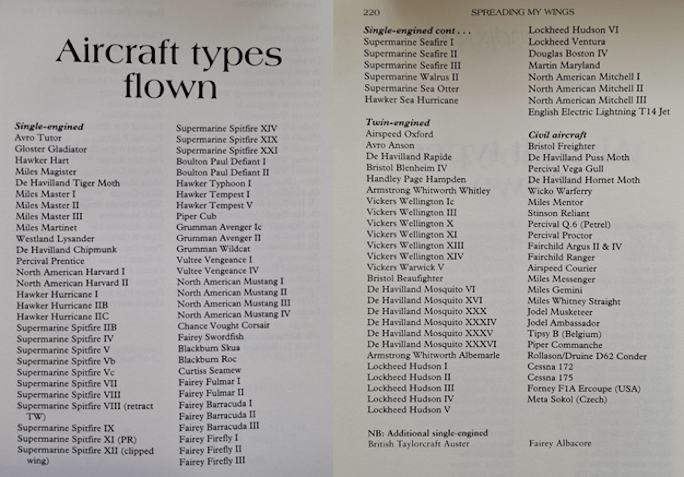
Being of slight build, she often needed a cushion to prop her up at the controls of the hundreds of airplanes of all types—all except the heaviest of bombers—she delivered to the front-line pilots.
A quotes from the Forward by Lord Shawcross: “Diana delivered fighter planes and twin-engined bombers in all weathers without radio or navigation aids. She had flown 220 Spitfires before she was 22 [reviewer note: actually 25] , delivering 260 of them in all as well as some other different types of planes—without damaging any!“
An unsettling experience whilst she was about to take off on her solo flight (you will have to read the book to find out what) made her determined to be an “Old” pilot, not a “Bold” pilot. She came close to death on a number of occasions but her guardian angel was a constant flying companion. She survived, but many of her friends, a fiancé and a husband did not.
Besides her guardian angel, her flying skills often got her out of trouble. She was assigned to fly a Grumman Avenger that naval pilots had taken a dislike to. Never having flown one before, not long after takeoff she discovered, and diagnosed, that the supercharger was linked up the wrong way around.
It was love at first sight for her (first) RAF pilot fiancé when he saw her land a Miles Magister at RAF Debden. He succeeded in keeping her there for three days by secretly arranging for the ground crew to take the spark plugs out.
Much of Diana’s postwar effort was devoted to encouraging young women to take up careers in aviation through an organization known as the Women’s Junior Air Corps. In 1963, at age 45, a friend in the RAF offered her a chance to fly in the new supersonic Lightning fighter. She set a new world air speed record for women, at 1,262 miles an hour, and became the first British woman to break the sound barrier. The following year, another woman—and former ATA colleague—the American pilot Jacqueline Cochran Odlum bested that time in an F-104G Starfighter at 1,429 mph.
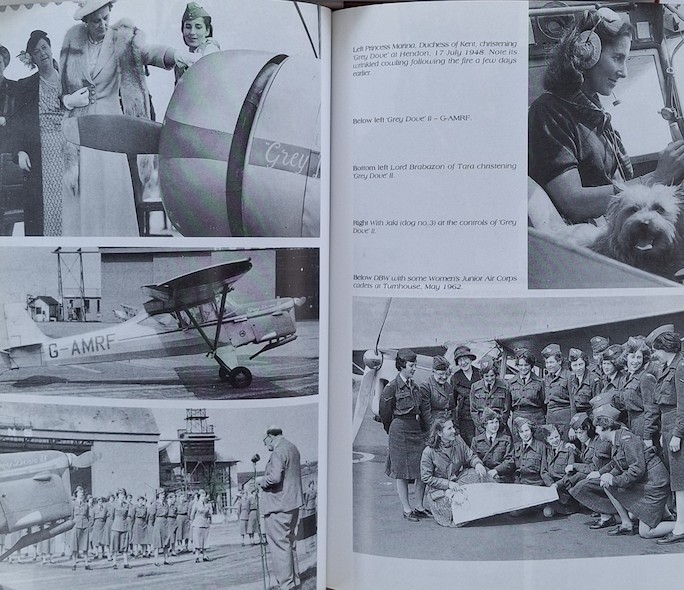
The book’s final pages record her matter-of-fact description of being diagnosed with cancer soon after her world record flight. Fortunately for her (and us) the treatment was successful and she lived another 44 years to write this book, dying in 2008 aged 90. She was awarded the MBE in 1965. She was also a Fellow of the Royal Aeronautical Society.
She accounts with candor for problematic aspects of her life. Although it must be remembered that at the time she lived it, factors such as emotional relationships and ancestry had different currency than they do now.
She does not apologize for her gilded childhood. Neither does she elicit sympathy for the myriad setbacks and tragedies she experienced. And there is neither false modesty nor over-stating her achievements. The last line in the book is “I do hope you have enjoyed my yarns as much as I liked writing them.” Indeed I did.
Every page is filled with amazing anecdotes from a time long gone, spiced with the author’s dry humor. A brave and skillful pilot, an inspiring teacher of young, would-be aviators, a highly adept horsewoman (not withstanding her involuntary six month hiatus), she was also a remarkably good author.
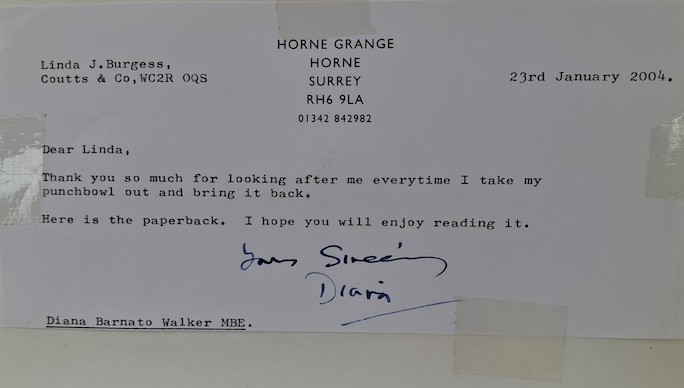
I found my copy on eBay, and it came with an unexpected bonus: taped to the inside cover was a personal signed letter from her to an acquaintance, making the book a treasured and permanent addition to my library.
Copyright 2026, Paul Lea (speedreaders.info)













 Phone / Mail / Email
 RSS Feed
 Facebook
 Twitter