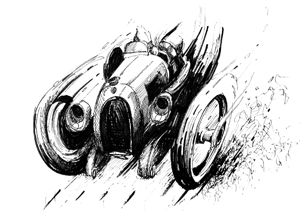

Dictionary of World Coachbuilders and Car Stylists

by Marián Suman-Hreblay
This impressive reference work lists all of the well known—and numerous not-so-well known—car coachbuilders and stylists in the world: 3174 car coachbuilding companies and design centers, and 1161 car stylists and related personalities.
Alpine and Renault: The Development of the Revolutionary Turbo F1 Car 1968 to 1979
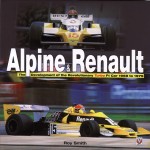
by Roy Smith
Neither Alpine nor Renault seem likely candidates for developoing the first turbocharged Grand Prix car. Finally there is proper book to tell the story of the people and ides behind it.
Joint Strike Fighter: Design and Development of the International Aircraft
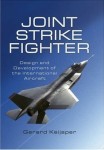
by Gerard Keijsper
Keijper’s excellent book tells the story of how the US aerospace industry took many ideas, some good others improbable, over a quarter century of model and wind tunnel testing to create, after many iterations, a viable supersonic vertical take off fighter.
The Book of Air Shows
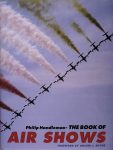
by Philip Handleman
Inspiring the young generation—not just in terms of technical matters but also in terms of history and the aircraft community with its camaraderie and lifestyle—is certainly a reason for long-time private pilot and photographer/filmmaker Handleman to write a book like this.
André Lefebvre and the Cars He Created for Voisin and Citroën
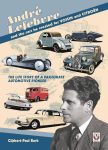
by Gijsbert-Paul Berk
In addition to his work at Voisin, Lefebvre was in large part responsible for the Citroën Traction Avant, the H series trucks and vans, the 2CV and the DS—to have been responsible for just one of these cars would be worthy of nomination to the Engineering Hall of Fame!
Hitler’s Motor Racing Battles: The Silver Arrows under the Swastika
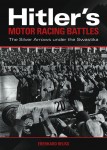
by Eberhard Reuss
Ever since producing a 1999 documentary on this subject for German television the author perceived a vacuum in the literature about the famous Auto Union and Mercedes-Benz Silver Arrows of the pre-World War Two period.
Battle of Britain Memorial Flight, 50 Years of Flying
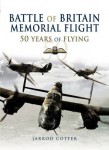
by Jarrod Cotter
Published on the occasion of the Flight’s golden anniversary, in 2007, this book is the first full account of the origins and activities of an organization (technically, it is a unit in the RAF) that is dear and near to the British, a veritable cultural touchstone.
Silver Arrows In Camera
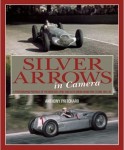
A Photographic History of the Mercedes-Benz and Auto Union Racing Teams 1934–39
by Anthony Pritchard
This book delivers more than its subtitle promises! If the word “photographic” were missing, no one would feel short-changed. Not only is it an excellent source of period photography, it also contains a thorough textual treatment in the form of contextual narrative.
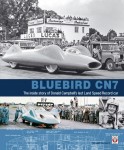
Bluebird CN7: The Inside Story of Donald Campbell’s Last Land Speed Record Car
by Donald Stevens
This book tells the story of a pair of brothers who designed and built CN7 with a mind to break the world’s land speed record. In the hands of Donald Campbell, the greatest-ever LSR holder, this gas turbine-powered car established itself as the fastest wheel-driven vehicle on earth.
Men of Power: The Lives of Rolls-Royce Chief Test Pilots Harvey and Jim Heyworth

by Robert Jackson
Test pilot brothers are a rarity. Both Heyworths worked for the same company, at the same time, and both became chief test pilot. Harvey, the elder of the two became the third test pilot at Hucknall, where Rolls-Royce had its flight test establishment.
Fast Food: Roadside Restaurants in the Automobile Age
by John A. Jakle & Keith A. Sculle
The whole concept of “the roadside” as an entity in and of itself, let alone as a topic deserving of serious thought, still seems to be outside of the field of view of the general motoring public. Books like this seek to give visibility to the complex and often hidden influences of the automobile on culture and everyday life.
Bentley’s Great Eight: The Astonishing 50-Year Saga of one of History’s Greatest V8 Engines
by Karl Ludvigsen
A mighty engine of uncommon longevity, dissected here with customary Ludvigsen attention to detail. But why is it a Bentley and not a Rolls-Royce unit? That’s a whole other story.







 Phone / Mail / Email
 RSS Feed
 Facebook
 Twitter